
Tips · 7 min read
Highball vs Lowball: Two Glasses, Two Jobs
A tall column that protects carbonation against a short glass built around one big cube – the working difference between highball and lowball, drink by drink.

 Arthur BulotaCo-founder & CEO, Glassique Cadeau
I kept seeing tall and short tumblers treated as interchangeable, and the wrong one quietly makes a good drink worse. I want you to understand that each shape is engineering for a different kind of drink.
Email me if you have any questions: shop@glassiquecadeau.com. I answer every email personally.

One glass protects bubbles. The other babysits a single enormous ice cube.
Strip a home bar to two glasses and these are the two: tall and short, fizz and spirit, column and slab. They get treated as interchangeable tumblers. They are not – each one is engineering for a different kind of drink, and using the wrong one quietly makes the drink worse.
TL;DR: Highball vs lowball is a question of build: a highball is a tall, narrow 10–14 oz glass for spirit-plus-mixer drinks over lots of ice, shaped to keep carbonation alive. A lowball (rocks or Old Fashioned glass) is a short, wide 6–10 oz glass for spirit-forward drinks built over one or two big cubes. Tall protects fizz – see our highball collection; short serves the spirit.
The Difference at a Glance
A highball is a tall 10–14 oz glass that protects carbonation; a lowball is a short 6–10 oz glass for spirit-forward drinks.
| Feature | Highball | Lowball (rocks glass) |
|---|---|---|
| Shape | Tall, narrow, straight-sided | Short, wide, heavy base |
| Capacity | 10–14 oz | 6–10 oz |
| Ice | Filled to the top, stacked cubes | One or two large cubes – or none |
| Typical pour | 2 oz spirit + 4–6 oz mixer | 2–3 oz spirit, minimal dilution |
| Signature drinks | Whisky highball, G&T, Mojito, Tom Collins | Old Fashioned, Negroni, whiskey neat |
| Built where | In the glass, mixer poured last | In the glass, often muddled in it |
| The job | Keep it cold and carbonated | Keep it strong and slow |
The Highball: A Column Built for Carbonation
The tall, narrow column minimizes surface area per ounce, so a spirit-and-soda drink holds its sparkle longer.
The highball surfaced in 1890s New York as scotch lengthened with soda – the name's origin is disputed between a railroad signal (a raised ball meant proceed at speed) and bartender Patrick Duffy's claim to the drink. Japan later made it a national institution: Torys bars built whisky-soda culture in the 1950s, and a late-2000s revival made the crisp highball the default way a generation drinks whisky.
The shape is carbonation engineering. CO2 escapes at the liquid's surface, and a tall, narrow glass exposes the minimum surface per ounce – the drink loses its sparkle slower than the same pour in a wide tumbler. The column also gives rising bubbles a long runway (half the pleasure is watching), and a full stack of ice chills the drink throughout instead of just at the bottom.
The build respects the same physics. Fill the glass with ice. Pour 2 oz of spirit. Add 4–6 oz of thoroughly chilled mixer down the inside wall or a bar spoon – splashing burns carbonation. One gentle lift with the spoon, no stirring. Done. Tokyo bars argue ratios the way Rome argues pasta – the common landing zone is 1:3 to 1:4 spirit to soda, and a properly cold glass matters more than either number. Our 1920s Highball set of 4 ($59.99) is the etched Art Deco version of the format; the Mykonos Highball ($39.99, 14 oz) is the clean modern one. (Spain solved the same problem the opposite way – more aroma, less fizz – and we covered that trade in our copa de balón guide.)
The Lowball: Ice-First Architecture
The short, wide tumbler pairs one large slow-melting cube with a nose-over-the-spirit mouth and a muddle-proof base.
The lowball – same glass as the rocks glass and the Old Fashioned glass – exists for drinks where dilution is the enemy and the spirit is the point. Its defining drink is literally the original definition of a cocktail: spirits, sugar, water, and bitters, as first printed in 1806. When that recipe needed a vessel you could muddle sugar in and build directly where it would be drunk, the short heavy tumbler got the job and never gave it back.
Here the physics run opposite to the highball. You want minimal, slow dilution, so you use one large cube or sphere – the smallest surface area per volume of ice, melting at a fraction of the rate of cracked ice. The wide mouth puts your nose over the spirit (a whiskey drink you can't smell is half a drink), and the thick base takes muddling without complaint and lands on the table with that satisfying full stop.
Most bartenders would say the lowball is the more forgiving glass to own first: it covers the Old Fashioned and Negroni family, whiskey neat, and anything stirred and short. Our Ribbed Lowball set of 4 ($42.99) is the workhorse; the Speakeasy Lowball ($42.99, 9 oz) leans into the 1920s costume. Both hand-blown, lead-free crystal, top-rack safe.
Lowball, Rocks, Old Fashioned: Same Glass?
Yes – three names for one short tumbler; only size varies, from 6–8 oz rocks to 10–12 oz doubles.
Effectively yes – three names for the short tumbler. "Rocks glass" describes what goes in it, "Old Fashioned glass" names its defining drink, "lowball" positions it against the highball. The only real distinction worth knowing is size: a standard rocks glass runs 6–8 oz, while a double Old Fashioned (DOF) runs 10–12 oz for two-cube pours and oversized spheres. If you order one glass for whiskey drinks, the double is the more versatile buy. Our whole lowball collection sits in that practical range.
Highball vs Collins Glass, While We're Here
A Collins glass is the taller, narrower 12–14 oz cousin, and the two substitute freely in practice.
The highball's tall cousin causes the other recurring mix-up. A Collins glass is taller and narrower still – usually 12–14 oz – named for the Tom Collins, the gin-lemon-soda drink whose name traces to an 1874 New York hoax (men were sent hunting a slanderous "Tom Collins" who didn't exist; bartenders started answering the question with a drink). In practice the two glasses substitute freely; the Collins just stretches the same carbonation column a little further. We shelve them together in the Mojito, Collins & highball collection for exactly that reason. For the rest of the glass taxonomy, our guide to the types of cocktail glasses handles the whole shelf, and stemmed shapes get their due in the coupe glasses guide.
Which Drinks Go Where
Bubbles and length go tall – G&T, Mojito, Collins; spirit and slowness go short – Old Fashioned, Negroni, neat pours.
Highball: whisky highball, gin and tonic, vodka soda, Mojito (La Bodeguita del Medio's Havana standard), Tom Collins, Dark 'n Stormy, Paloma, anything with bubbles and a long pour.
Lowball: Old Fashioned, Negroni (born at Caffè Casoni, Florence, 1919, when Count Camillo Negroni asked for gin in his Americano), Sazerac, Whiskey Sour on the rocks, Margarita on the rocks, any spirit served neat or over a single cube – which is why the lowball shares shelf logic with our whiskey and neat-spirit glasses.
The pattern, stated once: bubbles and length go tall, spirit and slowness go short. A Negroni in a highball looks lost. A G&T in a lowball goes flat by the third sip. The glass isn't decoration – it's the drink's pacing device.
Shop this guide
All 54 pieces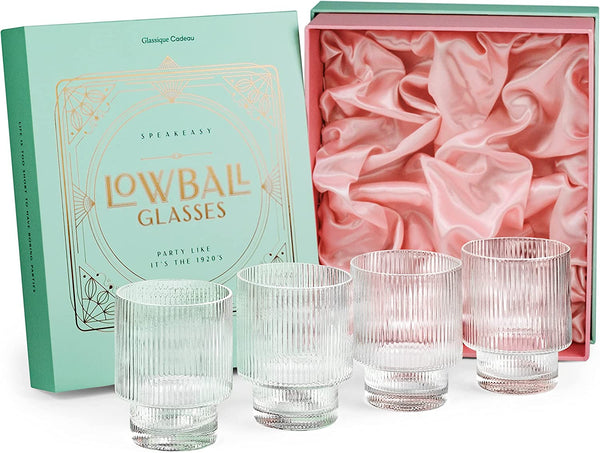
Our Pick

Our Pick

Limited Edition
Highball vs Lowball FAQ
What's the difference between highball and lowball?
A highball is a tall, narrow 10–14 oz glass for spirit-and-mixer drinks served over plenty of ice; a lowball is a short, wide 6–10 oz glass for spirit-forward drinks over minimal ice. The tall shape preserves carbonation; the short shape limits dilution and opens the aroma.
Is a rocks glass a lowball?
Yes – rocks glass, lowball, and Old Fashioned glass all name the same short, heavy-bottomed tumbler. The variants are size-based: standard rocks glasses hold 6–8 oz, double Old Fashioned glasses 10–12 oz for bigger pours and oversized ice.
What size is a highball glass?
Typically 10–14 oz. That fits a 2 oz spirit pour, 4–6 oz of mixer, and a full column of ice. Collins glasses run slightly taller and narrower at 12–14 oz, and the two substitute for each other freely in practice.
What drinks go in a lowball glass?
Old Fashioneds, Negronis, Sazeracs, Margaritas on the rocks, whiskey sours, and any spirit served neat or over a large cube. The defining traits: short pours, little or no carbonation, and drinks built or muddled directly in the glass.
What is the difference between a highball and a Collins glass?
Height and a couple of ounces. The Collins is the taller, narrower version (12–14 oz vs the highball's 10–14 oz), originally for the Tom Collins. Both serve long iced drinks with mixers, and most bars use them interchangeably without anyone noticing.
Why does a highball glass keep drinks fizzy?
Carbon dioxide escapes at the liquid's surface, and a tall narrow glass minimizes surface area per ounce, so the drink holds its carbonation longer. Cold helps too – CO2 stays dissolved better in cold liquid, which is why a highball gets filled with ice and chilled mixer.
Pair with: highball & Collins glasses, lowball glasses, Mojito & Tom Collins glasses, Old Fashioned & Negroni glasses, his birthday gifts, all drinkware.
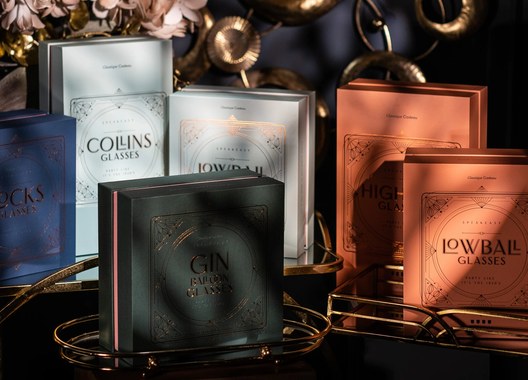
Two glasses, two tempos – stock both and every drink in the canon has a home. Every set arrives in our signature satin-lined gift box with a cocktail recipe printed on the lid, and orders over $89 ship free.
- Lead-free, hand-blown crystal
- 30-day satisfaction guarantee
- Arrives gift-ready in a satin-lined box


