
Recipes · 5 min read
How to Make an Espresso Martini That Actually Has Crema
Fresh espresso, a hard 15-second shake, and a chilled coupe – the 1983 London classic done properly, foam and all.

 Arthur BulotaCo-founder & CEO, Glassique Cadeau
Most Espresso Martinis I am served look like a sad brown puddle, and it seemed unfair that a drink this popular is made badly so often. I want you to get the crema right and know exactly why it appeared.
Email me if you have any questions: shop@glassiquecadeau.com. I answer every email personally.

The only cocktail that works at both ends of the evening.
The Espresso Martini is a bartender's apology to anyone who has to stay awake past ten. Invented in 1983, left for dead in 2005, and now the single most-ordered "up" cocktail of the decade. The difference between a great one and a sad brown puddle is exactly three things: fresh espresso, a violent shake, and a cold glass.
TL;DR: Shake 2 oz vodka, 1 oz fresh espresso, ½ oz coffee liqueur and ¼ oz simple syrup HARD with ice for 15 seconds. Double-strain into a chilled coupe or martini glass. Three coffee beans on the crema. The foam is not optional – it's the drink.
What you need
Cold vodka, one ounce of just-pulled hot espresso, coffee liqueur, a touch of syrup, three beans.
- 2 oz vodka – clean and cold. This drink doesn't need character from the spirit; the coffee provides it.
- 1 oz fresh espresso – pulled within the last minute, still hot. The crema on fresh espresso is what builds the foam crown. Cold brew makes a flat, sweeter drink (fine, but it's a different cocktail). Instant coffee makes regret.
- ½ oz coffee liqueur – Kahlúa is standard; Mr Black makes it drier and more serious.
- ¼ oz simple syrup – adjust to your liqueur. Mr Black wants the full ¼ oz; Kahlúa can skip half of it.
- 3 coffee beans – the traditional garnish. Health, wealth, happiness.
The spec, at a glance:
| Component | Spec |
|---|---|
| Vodka | 2 oz |
| Fresh espresso | 1 oz |
| Coffee liqueur | ½ oz |
| Simple syrup | ¼ oz |
| Glass | Chilled coupe or martini glass |
| Method | Shaken hard, 15 seconds, double-strained |
| Garnish | 3 coffee beans |
The method
Chill the glass, pull the shot last, shake hard 15 seconds, double-strain, three beans on the crema.
- Chill the glass first. Freezer, 10 minutes. Espresso enters the shaker hot – you need every degree of cold you can bank.
- Pull the espresso last. Straight into the shaker, hot. Heat is fine here; the ice will win.
- Shake like you mean it. 15 seconds, hard enough that your neighbors wonder. The hot espresso meeting cold ice is what whips the crema into foam – a lazy shake gives you a flat drink with a sad gray skin.
- Double-strain. Hawthorne strainer plus a fine mesh over the glass. This catches ice shards and lets the foam settle into a clean, dense crown.
- Garnish. Three beans, centered on the foam. Done.
The glass debate
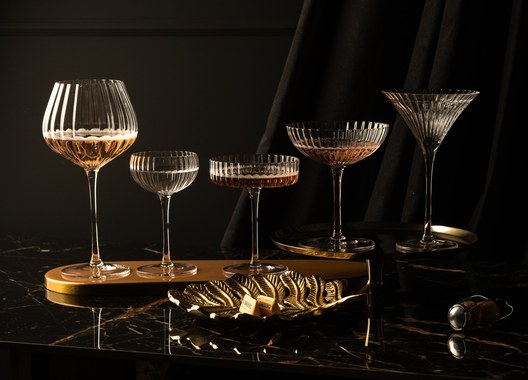
The V-shaped martini glass earns its keep here – a chilled coupe is the better call for parties.
Honestly, this is the rare drink where the V-shaped martini glass earns its keep – the straight sides show off the two-layer split between dark body and pale foam. Our Modern Martini Glasses ($42.99 for 4, 7 oz) are sized so a 4.5 oz espresso martini sits exactly at the line.
The coupe is the other correct answer – and the better one for parties, since coupes spill less when carried. For the full dark-glam effect, the Art Deco Smoke Black Coupe ($69.99 for 4) was practically designed for this drink – smoke-black crystal under tan crema is the best-looking serve in the modern repertoire.
The mistakes
Old espresso, a lazy shake, too much syrup, and cream are the four ways to ruin it.
Old espresso. Crema dies within minutes. Pull the shot last, shake immediately.
Under-shaking. The foam is mechanical, not chemical. 15 hard seconds minimum.
Too sweet. The 1983 original was a pick-me-up, not a milkshake. If you can't taste the coffee's bitterness, cut the syrup.
Cream. No. That's a different (worse) drink.
Quick history lesson
Dick Bradsell invented the drink at London's Soho Brasserie in 1983 – by 2022 it was the world's most-googled cocktail.
London, 1983, the Soho Brasserie. A young bartender named Dick Bradsell – the man who rebuilt London's cocktail culture nearly single-handedly – gets asked by a famous model for something that would, in her words, wake her up and then sort her out. The espresso machine sat next to his station. He shook fresh espresso with vodka and coffee liqueur, and the Vodka Espresso was born – renamed the Espresso Martini in the 90s when everything served in a V-glass became a Martini.
Bradsell died in 2016, having also invented the Bramble and the Russian Spring Punch. The Espresso Martini outlived the espresso machine placement that created it – by 2022 it was the most-googled cocktail recipe in the world. Not bad for an accident of bar layout.
Shop this guide
All 54 pieces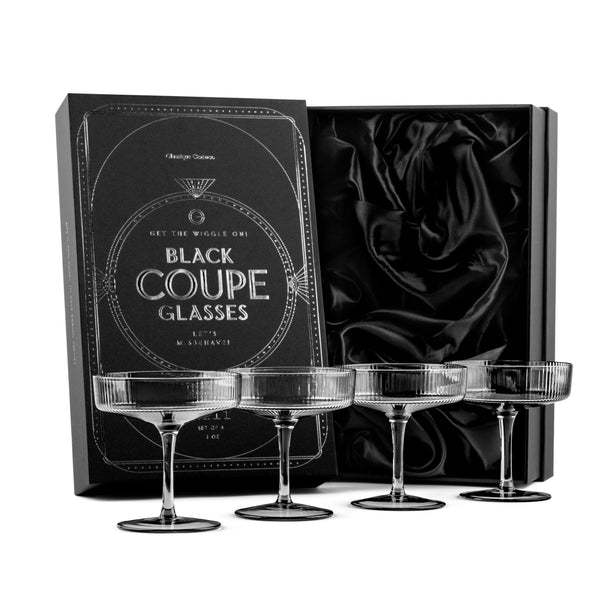
Perfect for Him

New Arrival
Limited Edition
FAQ
What's in an espresso martini?
2 oz vodka, 1 oz fresh espresso, ½ oz coffee liqueur, ¼ oz simple syrup – shaken hard, double-strained, three coffee beans on top.
How do you get the foam on an espresso martini?
Fresh, hot espresso plus a hard 15-second shake. The crema proteins whip against the ice into a dense foam. No fresh espresso, no real foam.
Can you use cold brew in an espresso martini?
You can – it's smoother and sweeter, but you lose the crema and most of the foam. Add ½ oz more cold brew to compensate for the missing intensity.
What glass is an espresso martini served in?
A chilled martini V-glass or a coupe, 6-8 oz – both covered in our guide to types of cocktail glasses. The two-tone layers are the show – use clear or dark-tinted crystal, never frosted.
Is there caffeine in an espresso martini?
Yes – roughly 60-75 mg from the shot plus a little from the liqueur. About two-thirds of a regular espresso's kick per drink.
Why three coffee beans?
Italian tradition – they represent health, wealth and happiness. One bean reads as minimalist; two reads as a mistake.
Pair with: martini glasses, coupe glasses, cocktail party glassware, birthday gifts for her, Christmas cocktail glasses, best sellers.
Both glasses ship in our signature gift box with the recipe printed on the lid. Free shipping over $89.
- Lead-free, hand-blown crystal
- 30-day satisfaction guarantee
- Arrives gift-ready in a satin-lined box


