
Recipes · 8 min read
How to Make a French 75: Gin, Lemon, Champagne
The French 75: 1 oz gin, 1/2 oz lemon, 1/2 oz syrup, 3 oz brut Champagne – plus the coupe vs flute debate and the 1915 Harry's New York Bar origin.

 Arthur BulotaCo-founder & CEO, Glassique Cadeau
The coupe-or-flute argument comes up at every gathering where a French 75 is poured, and I wanted to settle it properly instead of shrugging. I want you to make one that lands the way its name promises.
Email me if you have any questions: shop@glassiquecadeau.com. I answer every email personally.

Gin, lemon, sugar, Champagne – named after a field gun, and it earns the name.
The French 75 is what happens when a sour meets a glass of Champagne and neither backs down. It reads like a brunch drink and lands like artillery. Here's how to make a French 75 with the right ratios, the right glass, and the century-old argument about what spirit belongs in it.
TL;DR: Shake 1 oz gin, 1/2 oz fresh lemon juice, and 1/2 oz simple syrup with ice. Fine-strain into a chilled flute or coupe from our champagne & sparkling collection, top with 3 oz of cold brut Champagne, and garnish with a long lemon twist.
What Goes Into a French 75
One ounce of London dry gin, half lemon, half syrup, and three ounces of cold brut Champagne.
Four ingredients, one of which does most of the talking.
- 1 oz (30 ml) gin – London dry. The juniper has to survive three ounces of wine.
- 1/2 oz (15 ml) fresh lemon juice – squeezed that day. Bottled juice reads sour and flat, and there is nowhere to hide it here.
- 1/2 oz (15 ml) simple syrup – equal parts sugar and water.
- 3 oz (90 ml) brut Champagne – or a dry sparkling wine. Cold matters more than pedigree.
The spec, at a glance:
| Component | Spec |
|---|---|
| Gin (London dry) | 1 oz (30 ml) |
| Fresh lemon juice | 1/2 oz (15 ml) |
| Simple syrup | 1/2 oz (15 ml) |
| Brut Champagne | 3 oz (90 ml), added last |
| Glass | Chilled flute or coupe |
| Method | Shaken 10 to 12 seconds, fine-strained, then topped |
| Garnish | Long lemon twist |
Is a French 75 sweet? No – built correctly it's crisp, citrus-first, and dry on the finish. The syrup exists to round off the lemon, not to sweeten the drink. If yours tastes like lemonade, the wine wasn't dry enough or the syrup pour got generous.
How to Make a French 75, Step by Step
Shake the gin, lemon, and syrup 10–12 seconds, fine-strain, then top with Champagne – never shake the wine.
- Chill your glass in the freezer for 10 minutes. A warm flute kills bubbles on contact.
- Add the gin, lemon juice, and simple syrup to a shaker with ice.
- Shake hard for 10 to 12 seconds – this part of the drink wants aeration.
- Fine-strain into the chilled glass to catch pulp and ice shards.
- Top slowly with 3 oz of cold Champagne. Let the foam settle, then finish the pour.
- Express a lemon peel over the surface, twist it into a spiral, and drop it in.
The one rule people break: never shake the Champagne. The sparkling wine goes in last, straight into the glass. Shaken bubbles are a mess on your bar and a flat drink in your hand.
On the syrup – make it yourself. Stir equal parts sugar and hot water until clear, cool it, and it keeps two weeks in the fridge. Thirty seconds of effort, and you stop being at the mercy of whatever a store-bought bottle decided "simple" means.
Coupe or Flute: The Honest Answer
Flutes preserve carbonation longest; the coupe is 1920s-correct and gives more aroma – both are right.
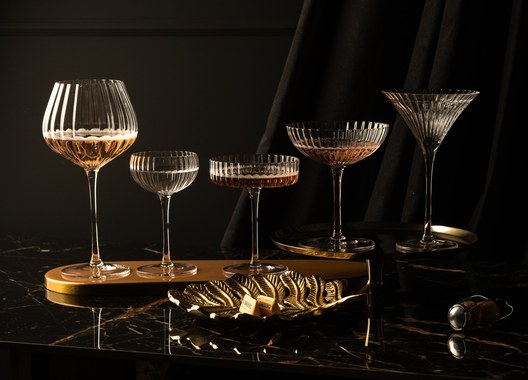
Both are correct, and the choice says something about you. The flute is the modern standard – it preserves carbonation longest and shows off the bead, which is why most bars default to it. The coupe is what the drink was actually served in during the 1920s, and it gives you more aroma at the rim. (Our coupe glasses guide covers why the wider bowl trades bubble life for fragrance.)
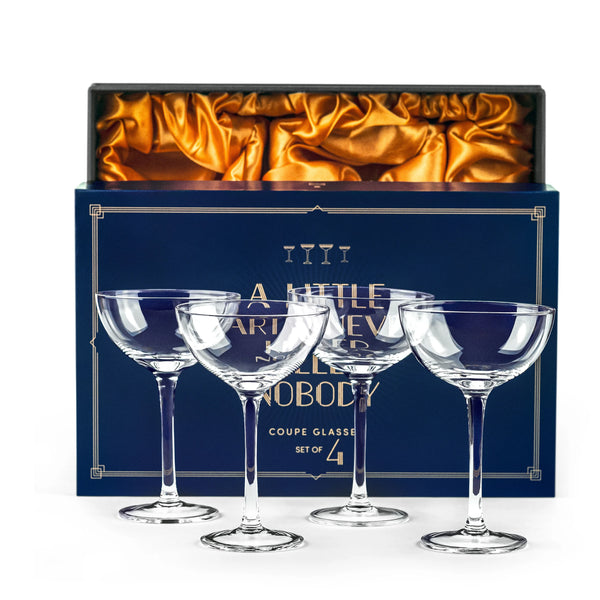
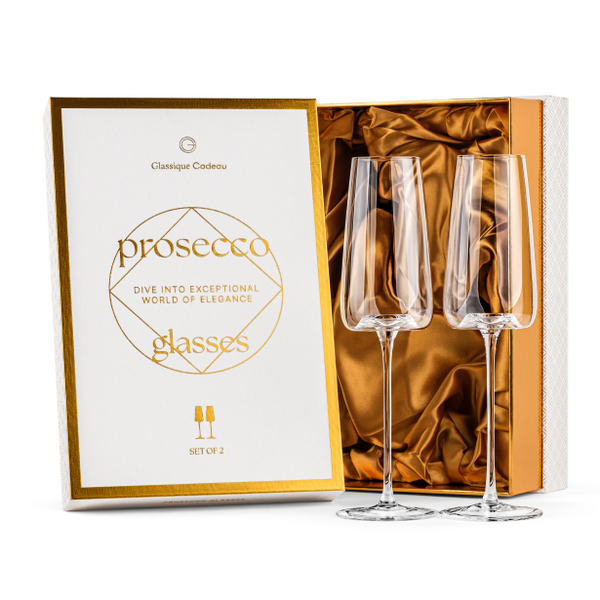
From our own shelves: the Gold Rim Square Champagne Flutes ($39.99, set of 2) for the bubble-preservation camp – hand-wash those gold rims – and the Roaring 20s Coupe set of 4 ($59.99) for the period-correct camp. Both are hand-blown, lead-free crystal. The full coupe collection runs 16 silhouettes if neither of those settles it.
Gin or Cognac: The Two Camps
Gin is the standard spec – New Orleans' Arnaud's builds it on Cognac for a warmer, autumnal drink.
The standard spec is gin, and that's what you'll get in most bars on either side of the Atlantic. But New Orleans never signed the treaty. Arnaud's French 75 Bar – the cocktail's most famous address in America – builds it on Cognac, which turns a bright spring drink into something warmer and more autumnal. Honestly, both versions are excellent; they're just different drinks sharing a name.
Worth saying: if you go the Cognac route, keep the lemon and sugar identical. The wine does the lifting either way.
Why It's Called a French 75
Named for the French 75mm field gun – born at Harry's New York Bar in Paris around 1915.
The drink takes its name from the French 75mm field gun, the rapid-fire artillery piece that defined the First World War – a gun that could put roughly 15 aimed shells a minute downrange. The cocktail was named for the recoil. The accepted origin puts it at Harry's New York Bar in Paris around 1915, where bartender Harry MacElhone mixed gin, lemon, sugar, and Champagne for a clientele thick with pilots and war correspondents. By 1927 the recipe was appearing in American bar books, Prohibition notwithstanding, and the drink's paper trail has been steady ever since.
It also got the full Hollywood treatment: a French 75 is the drink Victor Laszlo orders at Rick's in Casablanca (1942). Few cocktails have better references – a Paris birth certificate, a war story, and a speaking role in the most quotable film of its decade. Most drinks get one of those if they're lucky. This one collected all three before its thirtieth birthday.
Prosecco, Cava, or Champagne
Brut Champagne is traditional; prosecco works with less syrup; dry cava is the sleeper pick. Pour it cold.
Brut Champagne is traditional, and its sharper acidity suits the drink. But a French 75 with prosecco is a perfectly respectable pour – just cut the simple syrup back to 1/4 oz, because prosecco runs sweeter than brut. Cava might be the sleeper pick: dry, inexpensive, and structurally closer to Champagne than prosecco is. Whatever you open, open it cold – 40°F, straight from the back of the fridge. Warm sparkling wine foams over the glass and goes flat before the toast. And no, the leftover half-bottle from last weekend doesn't count.
Batching for a Crowd
Bottle the gin, lemon, and syrup base ahead – 2 oz per glass, topped with 3 oz Champagne per round.
The French 75 might be the best party cocktail ever designed, because the labor splits cleanly in two. Before guests arrive: combine 8 oz gin, 4 oz lemon juice, and 4 oz simple syrup in a bottle and refrigerate – that's eight drinks of base, and it holds for a day. When someone wants one: pour 2 oz of the base into a chilled glass and top with 3 oz of Champagne. No shaker, no mess, fresh bubbles every round.
You get the theater of opening Champagne and none of the assembly-line fatigue. The host drinks too. That's the point.
The French 76, and Other Variations
Vodka makes it a French 76, Cognac a French 125, St-Germain turns it floral – learn the original first.
Swap the gin for vodka and you've made a French 76 – same build, cleaner profile, less argument from the spirit. A 1/4 oz of St-Germain alongside the gin turns it floral (drop the syrup entirely if you do). And the Cognac build above sometimes travels under the name French 125. All fine. Just know the classic spec before you start editing it – the 1915 original needs no help.
Shop this guide
All 54 pieces
Wedding Favorite
Most Gifted
Wedding Favorite
French 75 FAQ
What gin is best for a French 75?
A London dry with clear juniper – something assertive enough to read through 3 oz of sparkling wine. Save delicate, floral gins for a martini; here they vanish under the bubbles and lemon.
Is prosecco or brut better for French 75?
Brut Champagne is the traditional choice and keeps the drink dry. Prosecco works, but reduce the simple syrup to 1/4 oz to compensate for its sweetness. Dry cava splits the difference at a friendlier price.
Can I use Prosecco instead of Champagne?
Yes. The drink survives the substitution better than most Champagne cocktails. Use a dry (brut or extra dry) prosecco, pour it cold, and ease back on the syrup. Nobody at the table will file a complaint.
What is the difference between a French 75 and a French 76?
One ingredient: the French 76 replaces gin with vodka. The lemon, syrup, and Champagne stay the same. The 76 is smoother and more neutral; the 75 has the botanical backbone.
Why is it called a French 75?
It's named after the French 75mm field gun of the First World War. The drink emerged at Harry's New York Bar in Paris around 1915, and the name was a comment on its kick – polite glass, heavy recoil.
Is a French 75 sweet?
Not when made properly. With 1/2 oz of syrup against fresh lemon and brut Champagne, it finishes crisp and dry. Sweetness creeps in when the sparkling wine is off-dry or the syrup is overpoured.
Pair with: champagne & sparkling glasses, coupe glasses, Gatsby & Art Deco barware, New Year's Eve sets, wedding & engagement gifts, cocktail party glassware.
A drink named after artillery deserves a glass with some ceremony. Every Glassique Cadeau set arrives in our signature satin-lined gift box with a cocktail recipe printed on the lid, and orders over $89 ship free.
- Lead-free, hand-blown crystal
- 30-day satisfaction guarantee
- Arrives gift-ready in a satin-lined box


