
Recipes · 8 min read
How to Make a Negroni: The 1919 Equal-Parts Classic
The classic Negroni: 1 oz each of gin, Campari, and sweet vermouth, stirred over ice with an orange slice – plus the 1919 Florence story and the Sbagliato.

 Arthur BulotaCo-founder & CEO, Glassique Cadeau
I love that the Negroni has nowhere to hide, and I have still watched people ruin it with clever shortcuts. I want you to trust the equal-parts ratio and leave it alone.
Email me if you have any questions: shop@glassiquecadeau.com. I answer every email personally.

Equal parts gin, Campari, and sweet vermouth – settled in Florence in 1919 and not improved since.
The Negroni is the rare cocktail with no hidden technique, no obscure bottle, and no excuse for getting it wrong. Three ingredients, one ratio, one glass. Here's how to make a Negroni the way it has been made for over a century – and why every clever shortcut makes it worse.
TL;DR: Combine 1 oz gin, 1 oz Campari, and 1 oz sweet vermouth over a large ice cube in a rocks glass. Stir 20 to 30 seconds, garnish with an orange slice. That is the entire recipe. The discipline is in leaving the ratio alone.
What a Classic Negroni Is Made Of
One ounce each of London dry gin, Campari, and refrigerated rosso vermouth – three bottles, nothing else.
Three bottles. No citrus pressed, no syrup measured, no shaker touched.
- 1 oz (30 ml) gin – London dry, with enough juniper to argue with Campari and not lose. The best gin for a Negroni is rarely the most delicate one on your shelf.
- 1 oz (30 ml) Campari – the bitter red spine of the drink. In a classic Negroni, there is no substitute.
- 1 oz (30 ml) sweet vermouth – the rosso style. Refrigerate it after opening; vermouth is fortified wine, and it fades on a room-temperature shelf within a month.
Quality matters more here than in almost any other drink, because nothing is hiding. A tired vermouth has nowhere to go in a three-ingredient cocktail. Neither does a timid gin.
The spec, at a glance:
| Component | Spec |
|---|---|
| Gin (London dry) | 1 oz (30 ml) |
| Campari | 1 oz (30 ml) |
| Sweet vermouth (rosso) | 1 oz (30 ml) |
| Glass | Rocks glass, one large ice cube |
| Method | Stirred, 20 to 30 seconds – never shaken |
| Garnish | Thick orange slice |
The 1:1:1 Ratio Is the Whole Point
Equal parts balance bitter, sweet, and dry without intervention – and scale from one drink to a pitcher.
One part each. The Negroni's equal-parts build is what made it survive a century of fashion cycles – it balances bitter, sweet, and dry without a bartender's intervention, and it scales without math. One drink or a pitcher for eight, the arithmetic is identical.
Plenty of modern bars pour 1.5 oz of gin and call it a "gin-forward Negroni." Here's our take: that's a different drink wearing the Negroni's jacket. Try the canonical spec first. If you still want it drier after a few rounds, adjust – but most people discover the 1919 proportions were right all along.
The equal-parts build also makes this the easiest cocktail in the canon to batch. Hosting eight people? Pour 8 oz of each ingredient into a bottle, add about 4 oz of water to stand in for the dilution stirring would have provided, and park it in the freezer for two hours. It won't freeze – the alcohol is too high – and you spend the party pouring, not measuring. Guests notice.
How to Make a Negroni: Built or Stirred
Build it in the glass or stir and strain – 20 to 30 seconds either way, never shake.
Both methods are correct. Pick one based on how much ceremony the evening deserves.
Built in the glass (the everyday way):
- Fill a rocks glass with ice – one large cube melts slowest.
- Pour in 1 oz gin, 1 oz Campari, 1 oz sweet vermouth.
- Stir in the glass for 20 to 30 seconds, until the outside frosts.
- Garnish with an orange slice.
Stirred and strained (the bar way): combine all three in a mixing glass two-thirds full of ice, stir 25 seconds, then strain over fresh ice. You get slightly better temperature control and a clearer drink, because the ice that chilled it isn't the ice that sits in it.
Never shake. Shaking aerates and clouds a drink that should pour ruby-clear, and it dilutes faster than stirring – fine for citrus cocktails, wrong for an all-spirits build.
A word on ice, since it's a full third of the experience. Small, frosty cubes from a tired freezer tray melt fast and flatten the drink before you're halfway through. One large, dense cube – two inches is the standard – chills the same volume with far less surface area, so the last sip still tastes like the first. If your ice smells like the freezer, your Negroni will too.
The Glass: A Lowball, Always
A Negroni belongs in a short, heavy-bottomed lowball over ice – tall glasses over-dilute, coupes are for up drinks.
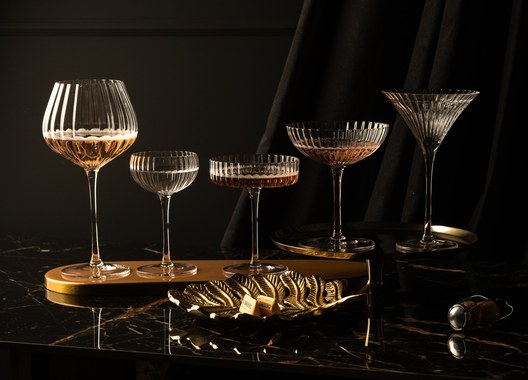
A Negroni belongs in a short, heavy-bottomed glass – the same silhouette that holds an Old Fashioned. Tall glasses over-dilute; stemmed coupes are for "up" drinks with no ice. The weight in the hand is part of the drink.
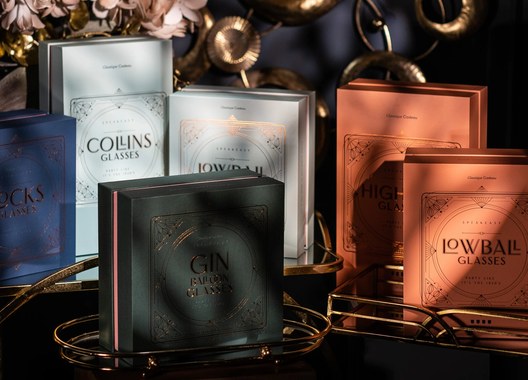
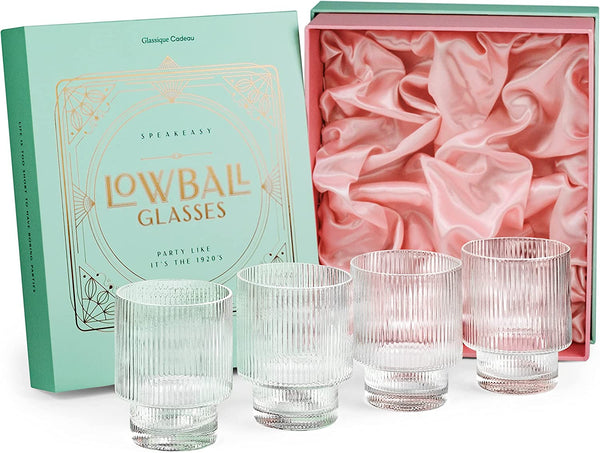
Our Old Fashioned, Negroni & Whiskey Sour collection exists for exactly this pour. Two we'd point you to first: the Art Deco Rocks Lowball set of 4 ($59.99) – hand-blown, lead-free crystal with the faceted geometry the drink's 1920s heyday deserves – and the Santorini Lowball ($36.99 for a 10 oz set of 4) if your bar leans modern. The full lowball collection runs deeper, but a Negroni in either of these looks like it was poured by someone who knew what they were doing.
Orange Slice, Not Peel
A thick orange half-wheel inside the glass – it bleeds juice and oil that soften Campari's edge.
The traditional garnish is a half-wheel of orange riding inside the glass, not an expressed peel perched on the rim. The slice bleeds a little juice and oil into the drink as it sits, softening Campari's edge by the final third. A peel is acceptable – plenty of respectable bars use one – but the slice is period-correct and works harder. Cut it thick. A wilted sliver of orange helps no one.
Florence, 1919: The Count Who Wanted It Stronger
Count Camillo Negroni created the drink in 1919 by asking Fosco Scarselli to swap his Americano's soda for gin.
The accepted origin: Count Camillo Negroni, a regular at Caffè Casoni in Florence, asked bartender Fosco Scarselli in 1919 to stiffen his usual Americano by swapping the soda water for gin. Scarselli marked the change with an orange garnish instead of the Americano's lemon, and the drink took the count's name. (The count, by most accounts, had spent time in America as a rodeo cowboy and gambler – which explains a man who found the Americano too gentle.)
Orson Welles, filming in Rome in 1947, wired home an early review: the bitters are good for your liver, the gin is bad for you, and they balance each other. The drink has needed no better endorsement since. The historical record is unusually tidy for a cocktail – most classics can't name their bartender.
The Negroni Sbagliato, and When to Break the Rules
The Sbagliato tops Campari and vermouth with prosecco; the Boulevardier swaps gin for bourbon – trust little else.
Milan, Bar Basso, 1972. Bartender Mirko Stocchetto, mid-rush, reached for a bottle of spumante instead of gin and served the mistake anyway. Sbagliato means "mistaken." Build it the same way – 1 oz Campari, 1 oz sweet vermouth – then top with about 2 oz of chilled prosecco instead of gin. Lighter, brunch-legal, and the only Negroni variation with its own viral moment.
The other variation worth knowing is the Boulevardier – Erskine Gwynne's 1927 Paris creation that swaps gin for bourbon and drinks like a Manhattan that studied in Milan. Beyond those two, be suspicious. A Negroni with more than four ingredients is a different cocktail with a borrowed name.
Shop this guide
All 54 pieces
Gift Ready
Our Pick

Limited Edition
Negroni FAQ
What is a classic Negroni made of?
Equal parts gin, Campari, and sweet (rosso) vermouth – 1 oz of each – served over ice in a rocks glass with an orange slice. Nothing else belongs in the classic spec.
What is the best ratio for a Negroni?
1:1:1. One part gin, one part Campari, one part sweet vermouth. It has held since 1919 because no ingredient outranks the others. If you prefer it drier, nudge the gin to 1.25 oz – but taste the original first.
How do you make the perfect Negroni?
Use fresh vermouth (refrigerated, opened within the month), a juniper-forward gin, and one large ice cube. Stir 20 to 30 seconds, never shake, and garnish with a thick orange slice. Cold glass, cold ingredients, correct ratio – that's the entire secret.
Why can't you shake a Negroni?
Shaking aerates the drink, clouds its color, and chips the ice into fast-melting shards that over-dilute it. All-spirit cocktails are stirred so they stay silky and clear. Save the shaker for drinks with citrus, dairy, or egg white.
Is Negroni better with Aperol or Campari?
Campari. Its harder bitterness is structural to the drink. Swap in Aperol and you get a sweeter, gentler cousin (sometimes called a Contessa) – pleasant, but it will read as watered-down to anyone expecting a Negroni.
What are some common mistakes when making a Negroni?
Stale vermouth, weak ice, guessing instead of measuring, shaking, and serving it in a tall glass. The drink has three ingredients and one job – balance – so every small error is audible. Measure with a jigger and you eliminate most of them.
Pair with: Negroni & Old Fashioned glasses, lowball & rocks glasses, Art Deco & Gatsby era barware, the classics collection, cocktail party sets, our bestsellers.
One ratio, one glass, one century of proof – pour it correctly and the Negroni does the rest. Every Glassique Cadeau set arrives in our signature satin-lined gift box with a cocktail recipe printed on the lid, and orders over $89 ship free.
- Lead-free, hand-blown crystal
- 30-day satisfaction guarantee
- Arrives gift-ready in a satin-lined box


