
Recipes · 8 min read
How to Make a Daiquiri: The Real 3-Ingredient Cocktail
The real daiquiri: 2 oz white rum, 3/4 oz lime, 1/2 oz syrup, shaken ice-cold into a coupe – from Jennings Cox's 1898 Cuba to Hemingway's El Floridita.

 Arthur BulotaCo-founder & CEO, Glassique Cadeau
Say daiquiri and most people picture a frozen strawberry slush, which is a shame for one of the cleanest drinks ever built. I want you to shake the real three-ingredient version and understand why the ratio matters more than anything.
Email me if you have any questions: shop@glassiquecadeau.com. I answer every email personally.

White rum, lime, sugar – the daiquiri was perfect in 1898 and the blender has been apologizing ever since.
Say "daiquiri" and most people picture a strawberry slush with a paper umbrella. The actual drink is one of the great achievements of the sour family: three ingredients, served ice-cold and bone-clear in a coupe. Here's how to make a daiquiri the way Havana built it – and why the ratio is the entire game.
TL;DR: Shake 2 oz white rum, 3/4 oz fresh lime juice, and 1/2 oz simple syrup hard with ice for 10 to 15 seconds. Double-strain into a chilled coupe and garnish with a lime wheel. No blender, no mix, no strawberries – that's a different drink wearing the same name.
Not the Frozen Slush
The classic daiquiri is pale, clear, and lime-led – it shares nothing with the 1970s machine slush but the name.
Let's clear the bar first. The frozen strawberry daiquiri is a real drink with its own fans, and at its birthplace it was made with care – shaved ice, fresh fruit, real lime. What killed the daiquiri's reputation was the 1970s machine version: bottled mix, neon color, rum as an afterthought. The classic daiquiri shares nothing with that but the name.
The real thing is pale, almost white, slightly cloudy from the shake, and tastes like cold sea air with a lime edge. It's also a bartender's interview question – order one and watch the bar straighten up. There's nowhere to hide in three ingredients.
The Ratio: 8:2:3, and Why the Math Matters
Eight parts rum, two syrup, three lime – 2 oz, 1/2 oz, 3/4 oz – tart leads, sweet follows.
The spec we pour: eight parts rum, two parts syrup, three parts lime. In ounces, that's:
- 2 oz (60 ml) white rum – a clean, dry Cuban-style blanco. Nothing heavily oaked; the rum should taste like cane, not vanilla.
- 1/2 oz (15 ml) simple syrup – 1:1 sugar and water.
- 3/4 oz (22 ml) fresh lime juice – squeezed within the hour if you can manage it. Lime fades faster than lemon.
The spec, at a glance:
| Component | Spec |
|---|---|
| White rum | 2 oz (60 ml) |
| Fresh lime juice | 3/4 oz (22 ml) |
| Simple syrup (1:1) | 1/2 oz (15 ml) |
| Glass | Chilled coupe |
| Method | Shaken hard, 10 to 15 seconds, double-strained |
| Garnish | Thin lime wheel |
Notice the lime outweighs the sugar. That's the daiquiri's signature: tart leads, sweet follows. If your limes are mild or you like the drink brighter, run the lime to a full ounce and nudge the syrup to 3/4 oz – the balance holds as long as lime stays ahead. The moment sugar wins, you're drinking limeade with a passport.
This is the same sour skeleton as a whiskey sour – swap the bottle, shift the citrus, new drink. Learn one, get the family free.
How to Make a Daiquiri, Step by Step
Shake all three violently for 10–15 seconds, double-strain into a freezer-cold coupe, garnish with a lime wheel.
- Put your coupe in the freezer for 10 minutes. A daiquiri served in a warm glass is half a daiquiri.
- Add 2 oz white rum, 3/4 oz lime juice, and 1/2 oz simple syrup to a shaker.
- Fill the shaker with ice and shake hard – properly hard – for 10 to 15 seconds, until the tin frosts over.
- Double-strain through a fine mesh strainer into the chilled coupe. The second strain catches the ice chips that would water down the first three sips.
- Garnish with a thin lime wheel.
The shake matters more here than in almost any drink. You're chasing two things at once: hard chill and fine aeration, the micro-bubbles that give a daiquiri its silk. A polite shake delivers neither. Wake the neighbors.
The Glass: A Coupe, Cold to the Touch
Served up with no ice, the daiquiri needs a chilled coupe – stemware keeps your hand off the bowl.
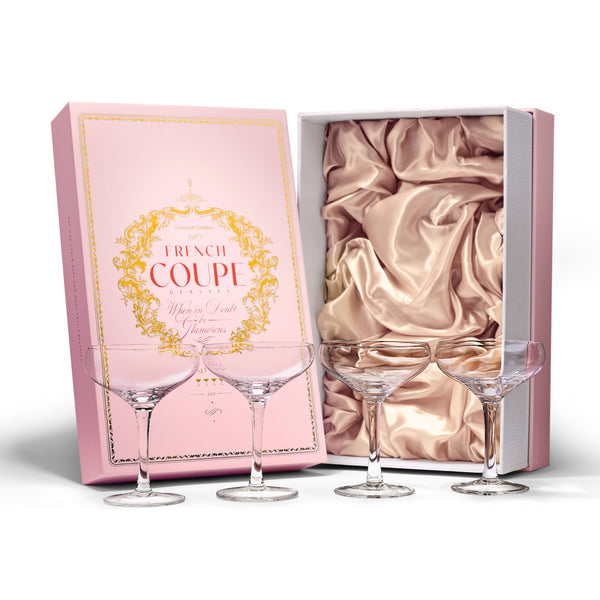
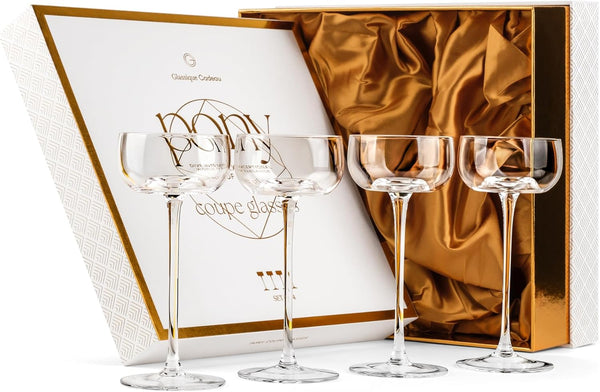
A daiquiri is served up, no ice, which means the glass does all the temperature work. Stemware keeps your hand off the bowl, and a coupe's wide mouth puts the lime aroma right under your nose. Our pick for the job: the Paris Coupe set of 4 ($49.99, 8 oz) – clean lines, hand-blown, lead-free crystal – or the French Coupe set of 4 ($59.99, 6 oz) if you prefer the tighter vintage proportion that keeps the pour compact and cold.
The full Gimlet, Daiquiri & Margarita collection covers the lime-cocktail family, and our coupe guide explains the silhouettes if you're choosing your first set.
Cuba, 1898: Jennings Cox Runs Out of Gin
Jennings Cox mixed rum, lime, and sugar near Santiago de Cuba in 1898 and named it after Daiquirí beach.
The accepted origin story: Jennings Cox, an American mining engineer working near Santiago de Cuba in 1898, ran short of gin while entertaining guests and mixed what the island had – local white rum, limes, sugar. He named the result after Daiquirí, the nearby beach and iron-mining town. Cocktail historians quibble over details (engineers rarely invent anything alone), but the name, the place, and the date have held up for over a century. The paper trail runs straight from Cox's mining camp to every serious bar on earth.
By the 1910s the drink had sailed north – the Army & Navy Club in Washington claims an early adoption – and Prohibition sent thirsty Americans south to meet it at the source.
Hemingway at El Floridita
Hemingway's Papa Doble doubles the rum and drops the sugar – try it once, then return to 8:2:3.
No drink has a better second act. At El Floridita in Havana, bartender Constantino Ribalaigua Vert spent the 1930s refining the daiquiri into a house science – and his most famous regular was Ernest Hemingway, who drank them in quantity and in his own spec: double the rum, no sugar, with grapefruit juice and a touch of maraschino liqueur. The bar still sells that version as the Papa Doble, and a bronze Hemingway still holds his corner seat.
Honestly, the Papa Doble is a harder drink to love than the legend suggests – most palates miss the sugar. Try it once for the history. Then come back to 8:2:3.
The Frozen Question
Frozen is fine with real rum, lime, and fruit – the crime was never the temperature, it was the mix.
Can a frozen daiquiri be respectable? Yes – Constante himself built frozen versions with shaved ice and fresh everything, and a blender daiquiri made with real rum, real lime, and real fruit is a fine summer drink. The crime was never the temperature. It was the mix. If a bottle labeled "daiquiri" did the measuring for you, the ratio is gone, the lime is a rumor, and the sugar is doing all the talking. Make the classic twice and you'll taste exactly what the machine version traded away.
Three Mistakes That Sink a Daiquiri
Old lime juice, an oaky rum, and slow service are the three mistakes that sink a daiquiri.
Old lime juice. Lime peaks within a few hours of squeezing and turns dull and bitter by the next day. Squeeze per session, not per week.
An aged rum that argues. Barrel-heavy rums drag vanilla and oak into a drink built for brightness. Save them for sipping – the daiquiri wants the clean, grassy end of the shelf.
Serving it slow. A daiquiri has roughly a five-minute window before it warms past its best. Make it when the drinker is standing in front of you, hand it over, and watch the first sip land. This is not a drink that waits politely on a tray.
Shop this guide
All 54 pieces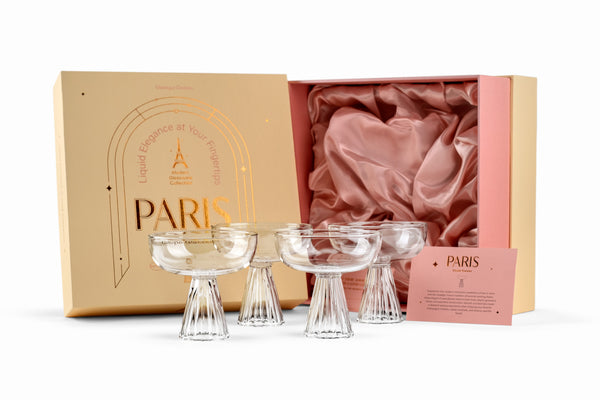
Limited Edition
Wedding Favorite
Gift Ready
Daiquiri FAQ
What is a classic daiquiri made of?
White rum, fresh lime juice, and simple syrup – nothing else. The standard build is 2 oz rum, 3/4 oz lime, and 1/2 oz syrup, shaken with ice and strained into a chilled coupe with a lime wheel.
What alcohol is in a daiquiri?
Rum – traditionally a dry, light-bodied white rum in the Cuban style. That's the only spirit in the classic. Swap it for anything else and the drink takes a new name.
What's the secret to a perfect daiquiri?
Fresh lime squeezed the same hour, a genuinely hard 10-to-15-second shake, a double strain, and a freezer-cold glass. The recipe is public knowledge; the difference between good and great is temperature and effort.
What's the easiest way to make a daiquiri?
Three pours into one shaker: 2 oz white rum, 3/4 oz fresh lime, 1/2 oz simple syrup. Shake hard with ice, strain into a cold glass. Three minutes, one piece of equipment, no blender required.
Will one daiquiri get you drunk?
One classic daiquiri carries 2 oz of rum – about the same alcohol as a strong glass of wine and a half. It drinks fast because it's cold and bright, which is the real hazard. Pace accordingly.
What is a Hemingway daiquiri?
El Floridita's Papa Doble, adapted: white rum, fresh lime, grapefruit juice, and maraschino liqueur, with no added sugar – built for a regular who liked his daiquiris dry and doubled. Tarter and more bitter than the classic.
Pair with: coupe glasses, gimlet & daiquiri glasses, Nick & Nora glasses, the classics collection, cocktail party sets, our bestsellers.
A drink this honest deserves crystal with nothing to hide either. Every Glassique Cadeau set arrives in our signature satin-lined gift box with a cocktail recipe printed on the lid, and orders over $89 ship free.
- Lead-free, hand-blown crystal
- 30-day satisfaction guarantee
- Arrives gift-ready in a satin-lined box


