
Tips · 7 min read
Speakeasy Decor: Building the 1920s Room
Passwords, 40-watt light, burgundy and brass, and a back bar where the crystal does the decorating – speakeasy decor that reads 1925, not theme kit.

 Arthur BulotaCo-founder & CEO, Glassique Cadeau
The original speakeasies had to feel luxurious while staying invisible from the street, and that tension is the whole design language. I want you to kill the ceiling light first, because lighting is more than half of this genre.
Email me if you have any questions: shop@glassiquecadeau.com. I answer every email personally.

A speakeasy is a room that keeps a secret. Decorate accordingly.
Prohibition took effect on January 17, 1920, and within a few years speakeasies – blind pigs, blind tigers, back rooms with a password – ran into the tens of thousands in New York alone. The good ones shared a design language: dim, rich, and deliberately hard to photograph. That's the brief for speakeasy decor today, whether you're dressing a basement bar for good or staging one night of it.
| Element | Spec | Rule |
|---|---|---|
| Entrance | Concealed or password door | Password on the invitation, enforced with a straight face |
| Lighting | Under 40 watts, 2200-2700K, plus candles | Kill the ceiling fixture; one warm LED strip behind the bottles |
| Palette | Burgundy or oxblood, emerald, walnut, brass | Bar wall painted darkest; no chrome, pure white, or matte gray |
| Texture | One velvet element | Pillows, a curtain, or a chair |
| Back bar | Two or three open shelves, odd numbers per shelf | 3-5-7 rule: stemware top, spirits middle, working glasses low |
| Sound | Jazz recorded before 1930 | Conversation volume – the room should murmur, not thump |
What Speakeasy Style Actually Is
The test for every purchase – would it look at home in a room pretending not to exist?
Speakeasy style is hospitality behind a poker face. The original rooms hid behind butcher shops and laundries; New York's 21 Club ran disappearing liquor shelves and a wine cellar behind a two-and-a-half-ton door. The aesthetic that survived – dark wood, low lamps, velvet, crystal catching candlelight – exists because those rooms had to feel luxurious while staying invisible from the street.
So the test for every purchase: would this look at home in a room that's pretending not to exist? Neon "BAR" sign, no. Heavy lowball glowing amber under a lamp, yes.
The Door: Passwords and the Reveal
A plain door, a password on the invitation, and a straight face – or a concealed bookcase entrance for keeps.
The entrance is a one-act play. For a party, that means guests arrive to a plain door, a doorbell note ("Deliveries knock twice"), and a password collected at the threshold – put it on the invitation and enforce it with a straight face. For a permanent home speakeasy, the move is concealment: a bookcase door, a curtain across the basement stairs, a cabinet front that swings.
Cheap version that works: enter through the garage or kitchen, not the front door. The wrongness of the route is the effect.
The Light: 40 Watts, Candles, and a Backlit Bar
Kill the ceiling fixture – warm 2200-2700K lamps, tea lights in lowballs, and one LED strip behind the bottles.
Nothing kills a speakeasy faster than overhead light. Kill the ceiling fixture entirely. Build the room from three low sources: table lamps with warm (2200-2700K) bulbs, candles – drop tea lights into spare lowball glasses, which is both safe and period-correct – and one strip of warm LED behind the bottles on your bar shelf.
That last one matters most. Backlighting turns every bottle and glass into stained glass, and hand-blown crystal earns its keep here in a way machine glass never does. Honestly, lighting is 60% of this entire genre.
Speakeasy Colors: Burgundy, Emerald, Walnut, Brass
Burgundy or oxblood, emerald, walnut, and brass – bar wall darkest, chrome and pure white stay out.
The palette is dark and warm, never black-on-black: burgundy or oxblood, deep emerald, walnut brown, and aged brass or gold for accents. One velvet element (pillows, a curtain, a chair) supplies the texture the era loved. If you're painting, paint the bar wall the darkest color in the room so the lit glassware floats against it.
What stays out: chrome, pure white, anything matte gray. Those read 2015 gastropub, not 1925 back room.
The Back Bar: Glassware as Wall Decor
Two or three open shelves styled by the 3-5-7 rule – stemware top, spirits middle, working glasses low.
A real speakeasy back bar is two or three open shelves where the drinking equipment is the decor. Style it like a set dresser:
- Odd numbers per shelf. The 3-5-7 rule from interior styling applies directly – three coupes, five bottles, one lamp reads better than any even arrangement.
- One dark accent. The Smoke Black Coupe (7 oz, set of 4, $69.99) against a backlit shelf is the single most speakeasy object we make.
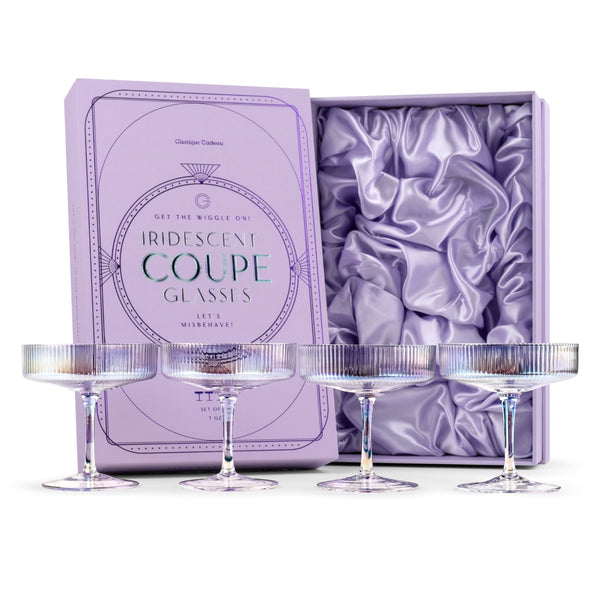
- One light-catcher. The Iridescent Coupe (set of 4, $69.99) throws oil-slick color under warm LED – the shelf's jewelry.
- The workhorses at hand height. The Speakeasy Lowball (9 oz, set of 4, $42.99) – yes, it's literally named for the job – plus whatever your lowball shelf already holds.
Stemware hangs or stands on the top shelf, spirits in the middle, working glasses low. Browse the coupe collection and the neat-pour glasses with the shelf in mind: you're buying decor that happens to hold gin.
The Sound and the Pour
Pre-1930 jazz at conversation volume, and brown stirred drinks – Old Fashioned, Negroni, one gin sour.
Jazz recorded before 1930, played at conversation volume – the room should murmur, not thump. We built the full playlist-and-menu logic in the 1920s themed party guide, and the glamour-end version in Gatsby party ideas. For a speakeasy specifically, keep the drinks brown and stirred: an Old Fashioned, a Negroni (born in Florence in 1919, the same year America voted itself dry), and one gin sour for relief. Print the menu small, like contraband.
DIY Speakeasy Decorations That Don't Look DIY
Under $50 total – real 1920s newsprint, apothecary jars, a chalked board – and spend the saved money on crystal.
Skip the printable gangster props. DIY speakeasy decorations that hold up: vintage newspaper front pages (print real 1920s editions at a copy shop), amber pill bottles or apothecary jars behind the bar ("medicinal whiskey" was a real Prohibition loophole – pharmacies sold it on prescription), a hand-chalked drinks board, and crates or trunks as side tables. Total spend under $50, and every piece survives into your permanent decor.
Where the money should go instead: the glass. A room can be 80% improvised if what people drink from is real crystal – and if you know someone mid-renovating a basement bar, a boxed set from the new home collection is the housewarming gift that names the room. Satin-lined box, recipe on the lid, zero chance it's regifted.
Shop this guide
All 54 pieces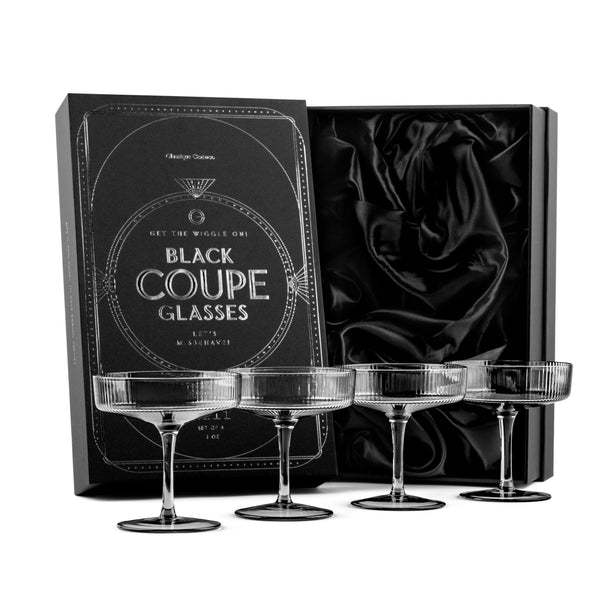
Perfect for Him
Bestseller

Limited Edition
Speakeasy Decor: FAQ
How to decorate for a speakeasy?
Dim the lights to lamps and candles, run a burgundy-emerald-walnut palette with brass accents, conceal or theatricalize the entrance, add one velvet texture, and style an open back bar with crystal glassware as the centerpiece.
What is a speakeasy style?
The design language of Prohibition-era hidden bars (1920-1933): dark wood, low warm light, rich color, lounge seating, and luxurious bar equipment in a room designed to be invisible from outside. Intimacy plus secrecy.
What is the best color for a speakeasy?
Deep burgundy or oxblood as the lead, with emerald green, walnut brown, and aged brass in support. Paint the bar wall darkest so backlit bottles and glassware carry the room.
How to make a speakeasy in your house?
Pick the least obvious room – basement, attic, the closet under the stairs. Conceal the entrance (curtain, bookcase, plain door), light it with lamps under 40 watts, and furnish it bar-first: shelving, spirits, and proper glasses before any wall art.
What is the 3-5-7 rule in decorating?
Group objects in odd numbers – threes, fives, sevens – because odd groupings read as natural rather than staged. On a bar shelf: three coupes, five bottles, one lamp. It's the fastest styling upgrade there is.
What glassware does a speakeasy bar need?
Heavy lowballs for stirred drinks, coupes for anything shaken or sparkling, and a few 4 oz tasting glasses for neat pours. Sets of 4 cover a couple; sets of 6 cover a party. Display them lit – they're the decor.
Pair with: speakeasy and Art Deco glassware, Glassique Cadeau lowball glasses, crystal coupes, snifters for the top shelf, our bestsellers, all drinkware.
Build the room nobody's supposed to know about, then make them earn the password. Every Glassique Cadeau set ships in a signature satin-lined gift box with a cocktail recipe printed on the lid, and orders over $89 ship free.
- Lead-free, hand-blown crystal
- 30-day satisfaction guarantee
- Arrives gift-ready in a satin-lined box


