
Tips · 10 min read
Non-alcoholic spritz: the recipe, the ratio and the right glass
Three zero-proof spritz builds with exact oz specs, the 3-2-1 ratio that keeps them tasting like a spritz, and the stemmed goblet that makes them read as one.

 Arthur BulotaCo-founder & CEO, Glassique Cadeau
The spritz is the drink our customers make most, and more of them are now making it without the Aperol. The glass turned out to matter as much as the bottle: fill a stemmed goblet with ice first and the same 3-2-1 build stays cold and reads as a cocktail. Pour both versions in the same crystal and nobody can tell which is which.
Email me if you have any questions: shop@glassiquecadeau.com. I answer every email personally.

A spritz is 90 percent glass and ice. The alcohol was never the point.
Half the table is drinking, half is not, and the half that is not gets a tumbler of orange soda. Most alcohol-free spritz recipes fix the liquid and ignore the glass. This guide fixes both: three builds with exact specs, the ratio that keeps them tasting like a spritz, and the goblet that makes them read as a cocktail.
Start with the glass, not the bottle
A non-alcoholic spritz needs a stemmed goblet of at least 12 oz, because the glass is doing the work the alcohol used to do.
Take the ethanol out of a spritz and the drink gets lighter while the drinker gets more critical. There is no buzz to forgive a flat serve. The glass has to close that gap.
Three mechanics matter. Ice: a spritz needs room for 6 to 8 cubes, 6 oz of liquid and a garnish, so 12 oz minimum, 15 oz comfortable. The stem: a hand sits at about 98 F, the drink at about 38 F, and in a zero-proof spritz there is no alcohol to hide a warm, watery second half behind. The bowl: a wide, rounded bowl concentrates the orange and bitter aromatics, which matters more when ethanol is not lifting them.
This is why we disagree with the advice to serve mocktails in ribbed tumblers so nobody pretends it is a cocktail. The point is that nobody can tell. Bartenders send the alcohol-free order out in the same glass as the cocktail so the guest is never outed. Do the same at home. Our full range of mocktail glasses is built on that rule.
The 3-2-1 ratio and why ice goes in first
Three parts sparkling, two parts bitter aperitivo, one part soda, in a glass already full of ice.
The Venetian spritz ratio is 3-2-1: three measures of prosecco, two of bitter, one of soda. Aperol's own recipe uses the same proportions. The logic holds without alcohol. Sparkling brings acidity and bubbles, the aperitivo brings bitterness, colour and body, and the soda dials down the sweetness so you can drink two. Alcohol-free sparkling wine runs sweeter than prosecco, so the soda matters more, not less. Sparkling tea is the drier swap.
Ice first, every time. Fill the goblet to the top before any liquid goes in. Ice already in the glass chills the pour, so the drink is cold from the first sip. And a full glass of ice melts far slower than three cubes floating in warm liquid, which is the single biggest reason a homemade spritz turns watery.
Build 1: the bitter-orange spritz
The closest thing to an Aperol spritz without alcohol, and the one to make for a mixed table.
- 2 oz non-alcoholic bitter aperitivo (Ghia, Lyre's Italian Spritz or similar)
- 3 oz alcohol-free sparkling wine or sparkling tea
- 1 oz soda water
- 1 orange slice
- Ice, to the rim
Fill a 15 oz stemmed spritz glass with ice. Pour the aperitivo, then the sparkling, then the soda. One gentle turn with a bar spoon, no more, or you lose the bubbles. Slide the orange slice down the inside of the glass so it stands against the ice. The 6 oz pour sits at about the two-thirds line with the ice in place, and that headroom is what makes it look like a bar serve rather than a full cup. Sweeter aperitivo: drop the sparkling to 2.5 oz and raise the soda to 1.5 oz.
Build 2: the Hugo without the prosecco
Elderflower, lime and mint, topped with sparkling water and a splash of alcohol-free fizz.
- 0.75 oz elderflower cordial
- 1 oz fresh lime juice
- 6 to 8 mint leaves
- Sparkling water, to top (about 3 oz)
- A splash of alcohol-free sparkling wine (about 1 oz)
- Ice, to the rim; lime wheel and a mint sprig to garnish
Clap the mint once between your palms, drop it into the goblet, add ice to the rim. Pour the cordial and lime, top with sparkling water, finish with the alcohol-free sparkling. Stir once from the bottom up.
The Hugo is why the 25 oz Copa is in this guide. It is lighter and more aromatic than the bitter spritz and carries more garnish, and a big balloon holds the mint, the lime and enough ice to stay cold on a hot terrace. Our Copa de Balon guide covers the shape. Keep the cordial at 0.75 oz; most recipes call for double and the drink turns to syrup by the second glass.
Build 3: the limoncello-style citrus spritz
Fresh lemon, a little honey syrup and tonic, for people who want bright rather than bitter.
- 1 oz fresh lemon juice
- 0.5 oz honey syrup (equal parts honey and hot water, cooled)
- 3 oz tonic water
- 1 oz soda water
- 1 lemon wheel
- Ice, to the rim
Fill the goblet with ice. Pour the lemon and honey syrup, then the tonic, then the soda. Stir once and rest the lemon wheel on the ice. Honey rounds the acidity and adds a faint floral note that reads as liqueur on the palate, the closest you get to limoncello's texture without alcohol. Tonic supplies quinine bitterness, so no aperitivo is needed. Drier: swap the tonic for sparkling water and double the lemon. A lemon wheel in a stemmed goblet is the visual language of the Aperol and limoncello spritz collection, so the zero-proof version sits naturally next to the boozy one.
Which glass: 15 oz spritz goblet, 25 oz Copa, 10 oz ribbed goblet, 17 oz Venice goblet or a wine glass
The 15 oz spritz goblet is the default; the Copa wins for the Hugo, the 10 oz ribbed goblet for a shorter 4 oz pour, and a wine glass is the fallback.
| Glass | Capacity | Best for | Set |
|---|---|---|---|
| Crystal Aperol Spritz glass | 15 oz (444 ml) | Bitter-orange spritz, citrus spritz, the default for a 6 oz build over ice | 2 |
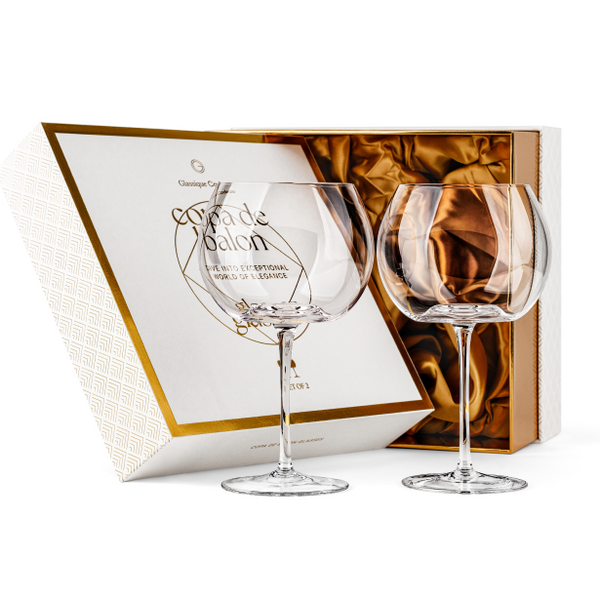
| Copa de Balon goblet | 25 oz (740 ml) | Hugo, anything with a lot of mint and garnish, long summer serves | 2 |
| Art Deco ribbed goblet | 10 oz (296 ml) | A shorter 4 oz spritz with less ice, brunch, tables of four or more | 4 |
| Venice Goblet | 17 oz (503 ml) | A full 6 oz build with a heavier ice load, borosilicate glass for everyday use, tables of four | 4 |
| Standard white wine glass | 12 to 14 oz (355 to 414 ml) | The fallback if you own nothing else; too narrow for a full ice load | n/a |
The 15 oz spritz goblet matches the math. Six ounces of liquid, a full load of ice and an orange slice land at about the 10 oz line, leaving the headroom that makes a spritz look like a spritz.
The 25 oz Copa is too big for a bitter spritz, where a 6 oz pour gets lost, and right for the Hugo, where you want a mountain of ice and mint. See the high-capacity glasses for gin and tonic or Hugo if that is your regular order.
The 10 oz ribbed goblet is for four matching glasses and a shorter drink: 1.5 oz aperitivo, 2 oz sparkling, 0.5 oz soda.
A wine glass works in a pinch. It is usually 12 to 14 oz, which is enough, but the bowl narrows early so you cannot pack the ice, and the drink warms faster. If you make more than one spritz a month, own the right goblet. Our cocktail glass size chart puts all of these next to each other.
What to buy: bottled non-alcoholic aperitivi
Bottled zero-proof aperitivi exist now, and three of them make a spritz that holds up next to Aperol.
A decade ago, alcohol-free meant orange juice and soda. Seedlip launched the first distilled zero-proof spirit in 2015 and the category grew up fast: the no and low alcohol market was worth about $20 billion in 2023, double 2019, and the International Wine and Spirits Record, the drinks trade's main data firm, projects another $4 billion by 2028. Bitter aperitivi were an early target.
Three examples. Ghia is a bitter, gentian-based aperitivo with less sweetness than most. Lyre's Italian Spritz is the closest stand-in for Aperol in colour and flavour. St. Agrestis Phony Negroni is a bottled Negroni you can pour straight over ice and top with sparkling. We do not sell any of them; they are the bottles bartenders name most, and any fits the 2 oz slot in build 1.
One caution: standard cocktail bitters run at about 40 percent ABV. For a strictly dry serve use a glycerin-based non-alcoholic bitters.
The mixed table: one goblet, two versions
Pour the Aperol spritz and the zero-proof spritz in the same crystal and nobody can tell who is drinking what.
Fifty-eight percent of people buying no and low alcohol drinks also drink alcohol. They moderate rather than abstain, and they switch within the same evening. That is your table. Pour the real spritz into a goblet and the alcohol-free one into a highball and you have told everyone who is on which side.
Same glass, same ice, same orange slice, same 6 oz build. Build 1 with Lyre's is indistinguishable from an Aperol spritz across a room. House rule: every guest gets the same crystal and no drink gets labelled. It is what a good bar does and what our glasses for non-alcoholic drinks are for. For a party, batch the ice-free base of each version in a jug, keep both in the fridge, and build to order over ice. For more zero-proof builds in the same spirit, see our Dry January recipes.
Shop this guide
All 54 pieces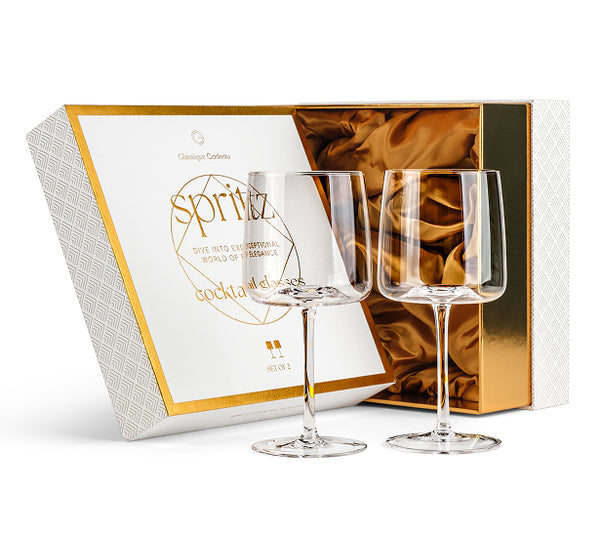
Gift Ready
Our Pick

New Arrival
Frequently asked questions
What is a non-alcoholic spritz made of?
Two oz of zero-proof bitter aperitivo, 3 oz of alcohol-free sparkling wine or sparkling tea and 1 oz of soda water, over a full glass of ice, with an orange slice. The 3-2-1 ratio is the original Venetian spritz; only the ingredients change.
What is the best glass for a non-alcoholic spritz?
A stemmed goblet of 12 oz or more, ideally a 15 oz spritz glass. It holds a full load of ice plus 6 oz of liquid with headroom, the stem keeps your hand off the bowl, and the wide bowl concentrates aroma, which matters more when there is no alcohol to carry it.
Can I make an alcohol-free spritz without a bottled aperitivo?
Yes. Build 3 uses fresh lemon, honey syrup, tonic and soda and needs no aperitivo because the tonic supplies the bitterness. Blood orange juice and tonic over ice also works. Both taste brighter and less bitter than a Ghia or Lyre's build.
Is a zero-proof spritz the same as a mocktail?
A zero-proof spritz is a mocktail, in the sense that it contains no alcohol. The difference is intent: it is built to the same proportions and served in the same glass as the cocktail it is based on, rather than as a separate soft drink. That is why the glass matters so much.
Why does my alcohol-free spritz taste watery?
Almost always because the ice went in after the liquid, or there was not enough of it. Fill the glass to the rim with ice first, then pour. A full ice load melts slowly; three cubes in a warm drink melt fast and dilute it. A narrow glass has the same effect.
Conclusion
Build the non-alcoholic spritz to the original 3-2-1 ratio, over a goblet already packed with ice, and it holds up next to the real thing. Use a 15 oz stemmed spritz glass by default, a 25 oz Copa for the Hugo, and a 10 oz ribbed goblet when four people want a shorter serve. Pour every version in the same crystal and stop labelling who is drinking what. The glass is the recipe.
If you want the goblets these builds were written for, the Crystal Aperol Spritz Cocktail Glasses (set of 2, 15 oz, $39.99) are the default pick and the one glass on this page we would buy first. The Copa de Balon Gin Goblet Cocktail Glasses (set of 2, 25 oz, $39.99) are the Hugo glass. The Art Deco Ribbed Goblet Cocktail Glasses with Stem (set of 4, 10 oz, $42.99) are the table set. All three are hand-blown lead-free crystal, dishwasher safe, ship from our US warehouse in a satin-lined gift box with a recipe on the lid, free over $89, with a 30-day satisfaction guarantee. They sit in the mocktail collection alongside the lowballs and goblets for shaken and stirred zero-proof drinks.
Sources
- Spritz (cocktail), Wikipedia: the 3-2-1 Venetian ratio and the drink's history
- International Wine and Spirits Record (IWSR): no and low alcohol market size and the share of buyers who also drink alcohol
- Difford's Guide, Aperol Spritz
- Alcohol Change UK, Dry January
- Copa de Balon guide, cocktail glass size chart, mocktail glasses, Aperol and limoncello spritz glasses
- Lead-free, hand-blown crystal
- 30-day satisfaction guarantee
- Arrives gift-ready in a satin-lined box


