
Tips · 8 min read
Lead-Free Crystal vs Lead Crystal: What Changed
What 24% lead oxide did for glass since 1674, why modern crystal swapped it for potassium and barium, and the actual facts on safety – no drama.

 Arthur BulotaCo-founder & CEO, Glassique Cadeau
Every week someone asks me whether crystal is safe, and I found the answers online were either scare stories or sales talk. I want you to know what actually changed in the recipe and why, with no drama in either direction.
Email me if you have any questions: shop@glassiquecadeau.com. I answer every email personally.

One ingredient built three centuries of glassware. Then chemistry found a better answer.
Pick up a heavy cut-glass decanter from the 1970s and a modern crystal coupe, and you're holding two different recipes separated by one decision: what to add to molten glass to make it brilliant. For 300 years the answer was lead oxide. It no longer is, and the reasons are worth knowing before you buy – or inherit – anything.
TL;DR: The lead free crystal vs lead crystal difference is one ingredient: traditional lead crystal contains at least 24% lead oxide (often 24–32%), while lead-free crystal replaces it with potassium, barium, or zinc oxides. Modern lead-free crystal matches the clarity and ring, runs harder and more durable, and removes the leaching question entirely. Our whole 47-piece catalog is lead-free crystal.
What "Crystal" Actually Means in Glassware
In glassware, "crystal" is a legal label for density and optics – glass with at least 10% metal oxide, not crystalline structure.
Start with a technicality bartenders enjoy: no drinking "crystal" is a crystal. Glass is amorphous – its molecules never line up in the lattice that defines actual crystals. The word is a marketing inheritance from the days when clear, brilliant glass reminded people of rock crystal quartz.
The law stepped in anyway. A 1969 European directive set the definitions still used today: glass needs at least 24% lead oxide to be sold as "lead crystal," 30% or more to claim "full lead crystal," and at least 10% metal oxide (of any approved kind) to use the word "crystal" at all. Most fine lead crystal of the 20th century settled between 24% and 32% PbO. So when a label says crystal, it's describing density and optics – not molecular structure.
Why Glassmakers Loved Lead: 1674 and After
Lead oxide lowered the melting point, raised the refractive index to 1.55, added density, and softened glass for deep cutting.
English glassmaker George Ravenscroft patented lead glass in 1674, and it solved several problems at once. Lead oxide lowers the melting point, so the glass stays workable longer. It raises the refractive index – from roughly 1.52 for ordinary soda-lime glass to 1.55 and beyond – which is the sparkle: light bends harder, disperses into color, and the glass throws small rainbows. It adds density, which reads as quality in the hand. And it makes the glass softer, which is why the great cut-crystal era happened at all – those deep wedge cuts in a Georgian decanter are only practical in soft lead glass.
The famous ring comes from the same chemistry. Tap a lead crystal bowl and the dense, soft material sustains a long, low chime. For three centuries, that sound was the audible signature of money on a table. Fair enough. It earned it.
The Safety Question, Without the Drama
Lead crystal leaches into liquids during long storage, not evening sips – store nothing in it and drink from heirlooms occasionally.
Here are the facts, minus the alarm bells. Lead crystal in contact with liquid releases small amounts of lead, and acidic liquids – wine, spirits, fruit juice – pull it out faster. A 1991 Columbia University study published in The Lancet measured port stored in lead crystal decanters and found lead levels that climbed steadily over weeks and months of storage. Short contact is a different story: a drink that sits in a lead crystal glass for an evening picks up far less, which is why health guidance has focused on storage rather than sipping.
The practical rules that came out of that research: don't store spirits or wine in lead crystal decanters long-term, don't serve anything acidic to children from it, and treat grandmother's cut-glass set as occasional serveware rather than daily drivers. Nobody's heirloom needs to go in the bin. California's Proposition 65 (on the books since 1986) requires warning labels on leaded glassware sold there, which is a large part of why the industry moved on.
Worth saying plainly: the move to lead-free wasn't a panic response. It was manufacturers concluding that if chemistry could deliver the same optics without the asterisk, the asterisk had no remaining job.
What Replaced Lead: Potassium, Barium, Zinc
Potassium, barium, and zinc oxides replaced lead, matching its brilliance and heft while adding hardness and dishwasher tolerance.
Modern lead-free crystal swaps lead oxide for other heavy oxides – most commonly potassium, barium, and zinc, sometimes titanium. The substitutes were standardized through the 1990s as major European glasshouses reformulated, and they recover nearly everything lead provided. Refractive index lands in the same neighborhood, so the brilliance survives. Density stays high enough for proper heft. The glass still rings – a slightly higher, shorter chime than old lead crystal, but unmistakably crystal to the ear.
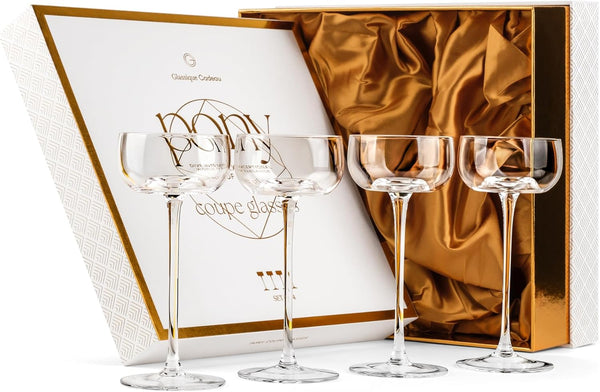
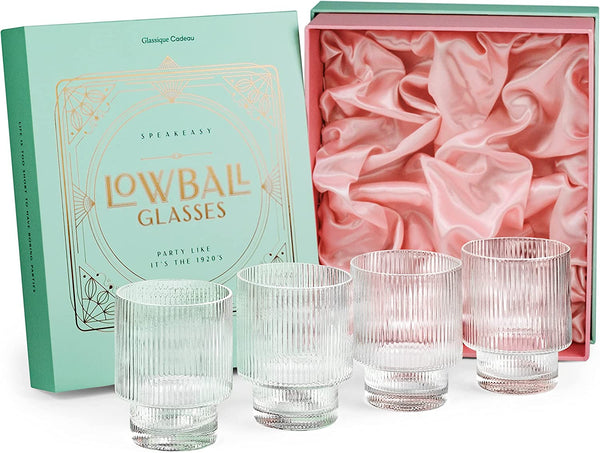
And the substitutes added properties lead never had. Lead-free crystal is harder, which means it scratches less, chips less, and tolerates a dishwasher's heat and detergent – old lead crystal clouds under that treatment because the soft surface etches. It can also be blown thinner without fragility, which is why modern crystal coupes manage walls and rims old formulas couldn't risk. Every glass we make – from the 4 oz whiskey tasting set ($46.99) to the French Coupe ($59.99) – is hand-blown, lead-free crystal, top-rack dishwasher safe, with hand-washing recommended only for gold rims.
Lead Crystal vs Lead-Free Crystal vs Plain Glass
Lead-free crystal matches lead crystal's brilliance with more durability and no storage restrictions; soda-lime glass is flatter and lighter.
| Property | Lead crystal | Lead-free crystal | Soda-lime glass |
|---|---|---|---|
| Key additive | 24–32% lead oxide | Potassium, barium, or zinc oxides | None (sand, soda, lime) |
| Brilliance | Benchmark sparkle | Matches or near-matches | Noticeably flatter |
| Weight | Heaviest | Substantial | Lightest |
| Hardness | Soft – cuts and scratches | Harder, more durable | Hard but brittle feel |
| Dishwasher | No – clouds over time | Generally yes (top rack) | Yes |
| Ring when tapped | Long, low chime | Clear, higher chime | Dull clink |
| Storage of spirits | Not recommended | No restrictions | No restrictions |
If you're weighing crystal against ordinary glass for a home bar, the difference shows up at the rim (crystal pulls thinner and finer), in the light, and in longevity. Our guides to the types of cocktail glasses and coupe glasses cover where each shape earns the upgrade.
How to Tell What You Own
Check weight, ring, light dispersion, and era – heavy pre-1990s cut glass is usually leaded, post-2010s crystal usually lead-free.
Inherited a cabinet and want to know which recipe you're holding? Four checks, in rising order of confidence:
- Weight. Lead crystal feels denser than its size suggests. Two similar glasses, one notably heavier – the heavy one likely has lead.
- The ring. Wet a finger and run it around the rim, or tap gently. A sustained, musical chime points to crystal of either kind; a dull tap says soda-lime glass.
- The rainbow. Hold it in direct light. High-lead glass splits light into visible color fringes.
- Era and origin. Heavy cut glassware made before the 1990s, especially European, is usually leaded. Anything sold as crystal since the 2010s by a mainstream maker is most often lead-free – the industry largely reformulated.
(A UV flashlight is the thrifter's party trick – lead glass often fluoresces blue-violet – but results vary enough that we'd call it a hint, not a verdict.) None of this requires action. It just tells you which pieces should pour for an evening rather than store for a season.
Shop this guide
All 53 pieces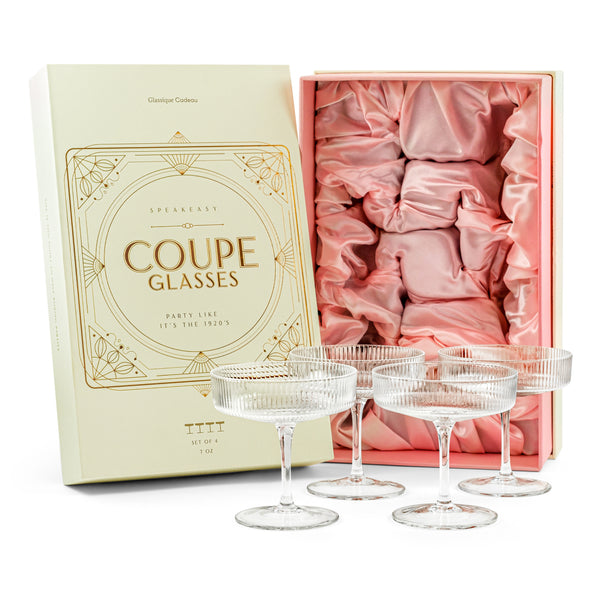
Bestseller
Gift Ready
Our Pick

Perfect for Him
Lead-Free Crystal FAQ
Is lead free crystal better than lead crystal?
For daily use, yes: it's harder, more chip-resistant, dishwasher-tolerant, and carries no storage restrictions, while matching the clarity and most of the heft. Traditional lead crystal still wins slightly on density and the depth of its ring – qualities collectors value, at a practical cost.
Is lead free crystal safe?
Yes. Lead-free crystal replaces lead oxide with potassium, barium, or zinc oxides, which are stable in the glass matrix and not a leaching concern. It's food-safe for drinking and for long-term storage of wine or spirits, with no special handling rules.
Is it unhealthy to drink out of lead crystal glasses?
Occasional drinking from lead crystal transfers very little lead – the documented concern is storage, where acidic liquids sitting for weeks absorb measurably more. Health guidance since the 1991 Lancet decanter study: drink from heirlooms occasionally if you like, but don't store liquids in them and don't make them a child's daily cup.
Is Waterford crystal now lead free?
Waterford built its name on traditional lead crystal, and much of its classic catalog is exactly that. The company has added lead-free crystalline lines in recent years. If it matters for how you'll use a piece, check the specific product line before assuming either way.
Does lead free crystal ring?
It does – a clear, bell-like chime, typically a touch higher-pitched and shorter-sustained than old lead crystal's low hum. If a glass only thuds when tapped, you're holding ordinary soda-lime glass, not crystal of either formula.
When did they start making lead free crystal?
Substitute formulas existed for decades, but the real shift came in the 1990s, when regulations like California's Proposition 65 and Europe's tightening standards pushed major glasshouses to reformulate. By the 2010s, lead-free crystal had become the default for new drinkware from mainstream makers.
Pair with: crystal coupe glasses, whiskey & neat spirit glasses, tasting glasses, champagne & sparkling glasses, wedding & engagement gifts, bestsellers.
Good crystal is chemistry you can hear – the recipe changed, the chime stayed. Every set arrives in our signature satin-lined gift box with a cocktail recipe printed on the lid, and orders over $89 ship free.
- Lead-free, hand-blown crystal
- 30-day satisfaction guarantee
- Arrives gift-ready in a satin-lined box


