
Recipes · 8 min read
How to Make a Sidecar: The Cognac Classic from 1920s Paris
The sidecar: cognac, Cointreau, and fresh lemon in a sugar-rimmed coupe – with the 1922 print history, the Ritz Paris claim, and the ratio debates.

 Arthur BulotaCo-founder & CEO, Glassique Cadeau
Every time I read the disputed history of the Sidecar, I wanted to write down a version that gets both the story and the ratio right. I want you to sugar that rim properly and taste why 1920s Paris kept ordering it.
Email me if you have any questions: shop@glassiquecadeau.com. I answer every email personally.

Cognac, Cointreau, lemon – Paris in a glass, with sugar on the rim and a dispute over the birth certificate.
The Sidecar is what the sour family looks like in a dinner jacket. Brandy instead of bourbon, orange liqueur instead of syrup, and a glass dressed for the occasion. Here's how to make a sidecar with the ratios argued correctly, the rim done properly, and the 1920s history poured straight.
TL;DR: Shake 2 oz cognac, 1 oz Cointreau, and 1 oz fresh lemon juice with ice for 10 to 15 seconds, then strain into a chilled, sugar-rimmed coupe. Garnish with an orange twist. Prefer it drier? Pull the lemon and Cointreau back to 3/4 oz each.
What Goes Into a Sidecar
Two ounces of VS or VSOP cognac, one of Cointreau, one of same-day lemon – no simple syrup.
- 2 oz (60 ml) cognac – a VS or VSOP. The drink was built on French brandy and still fits it best; save the XO for after dinner.
- 1 oz (30 ml) Cointreau – the orange liqueur is both sweetener and second voice. Grand Marnier works for a richer, rounder read.
- 1 oz (30 ml) fresh lemon juice – squeezed that day. The sidecar has only three ingredients; the lemon cannot be a compromise.
No simple syrup in the classic – the Cointreau carries all the sugar. If your first one drinks too tart (it happens; lemons vary), add a 1/4 oz of syrup rather than drowning it in more liqueur.
The spec, at a glance:
| Component | Spec |
|---|---|
| Cognac (VS or VSOP) | 2 oz (60 ml) |
| Cointreau | 1 oz (30 ml) |
| Fresh lemon juice | 1 oz (30 ml) |
| Glass | Chilled, sugar-rimmed coupe |
| Method | Shake with ice for 10 to 15 seconds, strain |
| Garnish | Orange twist |
The Ratio Wars: Equal Parts, 2:1:1, or Drier
Start at 2:1:1 – the 1922 equal-parts build is worth one historical pour, then back to spec.
The sidecar has been argued about since it first hit print. The earliest published recipes, in 1922, called for equal parts – cognac, Cointreau, and lemon in even thirds. That's the so-called French school: softer, sweeter, very period-correct. The formula most bars pour today is 2:1:1 – two parts cognac, one each of Cointreau and lemon – which puts the brandy back in charge. And modern palates that run dry often tighten it further, toward three parts cognac against two of Cointreau and one of lemon.
Here's our take: start at 2:1:1. It's the best-balanced of the three and the easiest to adjust from. The equal-parts build is worth one historical pour, the way you'd try a whiskey sour with the old 3:2:1 mnemonic – educational, then back to the spec.
The Sugar Rim, Done Properly
Rim before chilling, moisten only the outside edge, and sugar half the rim – the professional move.
The sidecar's signature, and the most commonly butchered move in home bartending. The rules:
- Rim the glass before chilling it, and hours ahead if you can – a rested rim hardens and sheds less.
- Moisten only the outside edge with a lemon wedge. Run it around the outer lip, not the inside; sugar inside the glass dissolves into the drink and re-sweetens every sip.
- Roll the outer rim through superfine sugar on a plate, tilted, so the crust forms on the exterior wall only.
- Do half the rim. Honestly, this is the professional move – it gives the drinker a choice with every sip and looks better than a full snowbank.
A sidecar without the rim is still a sidecar – plenty of serious bars skip it. But if you commit to sugar, commit to doing it cleanly.
How to Make a Sidecar, Step by Step
Rim and chill first, shake hard 10–15 seconds, strain off the sugared edge, orange twist.
- Prepare the sugar rim, then chill the coupe in the freezer for 10 minutes.
- Add 2 oz cognac, 1 oz Cointreau, and 1 oz fresh lemon juice to a shaker.
- Fill with ice and shake hard for 10 to 15 seconds, until the tin frosts over.
- Strain into the chilled glass, keeping the pour off the sugared edge.
- Express an orange twist over the surface and rest it on the rim.
1920s Paris: The Ritz Claim
The sidecar hit print in 1922 in Paris and London at once – the Ritz and Buck's Club still argue.
The sidecar's paper trail starts in 1922, when it appeared in two bar books at once – Harry MacElhone's in Paris and Robert Vermeire's in London – which is exactly why two cities still claim it. The favorite legend involves an American army captain who arrived at his Paris bar of choice in a motorcycle sidecar and wanted something warming before dinner. The Ritz Paris claims the drink was first poured at its bar, and the hotel has defended that story – at famous expense, with vintage-cognac versions priced like jewelry. London's Buck's Club holds the counterclaim through its bartender Pat MacGarry, named in Vermeire's book.
A century later, no one has settled it. The drink doesn't seem to mind. Like the French 75, born in the same Paris bar scene a few years earlier, the sidecar outgrew its origin story before the story was finished.
The Glass: A Coupe Now, a Snifter After
A chilled coupe with a rim worth sugaring now – a cognac snifter for the neat pour after.
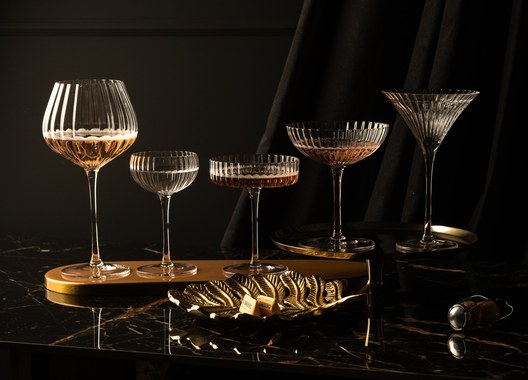
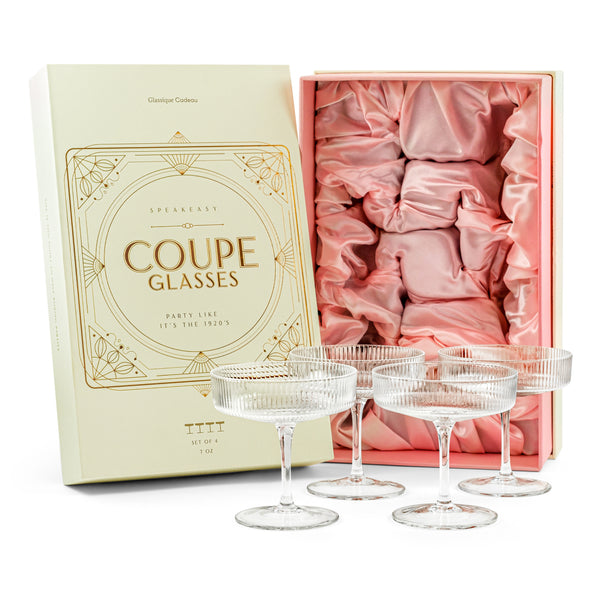
A sidecar is served up, cold, in stemware with a rim worth sugaring – which is to say, a coupe. Ours was practically named for the job: the Ritzy Coupe set of 4 ($49.99, 7 oz), hand-blown in lead-free crystal with enough rim presence to carry a half-moon of sugar properly.
And because a bottle of cognac is now open: the correct second act is a neat pour in a Snifter ($39.99, 15 oz set of 2), where the balloon shape concentrates everything the shaker would have scattered. The full snifter collection covers brandy in all its formats – the sidecar is, among its other virtues, the most elegant gateway drink cognac ever had.
Bourbon Sidecars and Other Variations
Bourbon, Grand Marnier, and tequila swaps all work because the order holds: strong, orange, sour.
Bourbon sidecar: swap the cognac for bourbon at the same 2:1:1 and the drink turns American – rounder, more vanilla, very good in autumn. Grand Marnier sidecar: richer and a shade darker; reduce the lemon slightly, since Grand Marnier runs less sweet than Cointreau. Tequila sidecar: follow that thought far enough and you arrive at the margarita's doorstep – the two drinks are cousins, one French, one with a passport full of lime stamps.
The structure forgives spirit swaps because the structure is the point: strong, orange, sour, in descending order. Hold that order and the sidecar travels well.
Where Sidecars Go Wrong
Cheap triple sec, bottled lemon, sugar inside the glass, and a warm coupe are the four failures.
Four common failures. Cheap triple sec – the orange liqueur is a third of the drink, and a thin one reads as sugar water with regrets. Bottled lemon – instantly detectable in a three-ingredient build. Sugar inside the glass – every sip gets sweeter until the last one drinks like syrup, which is why the rim technique above matters. And serving it warm – this is an up drink with no ice to rescue it, so the glass needs real freezer time, not a polite rinse under cold water.
None of these require skill to fix. They require deciding the drink deserves the good bottle and the extra ten minutes. It does.
Shop this guide
All 54 pieces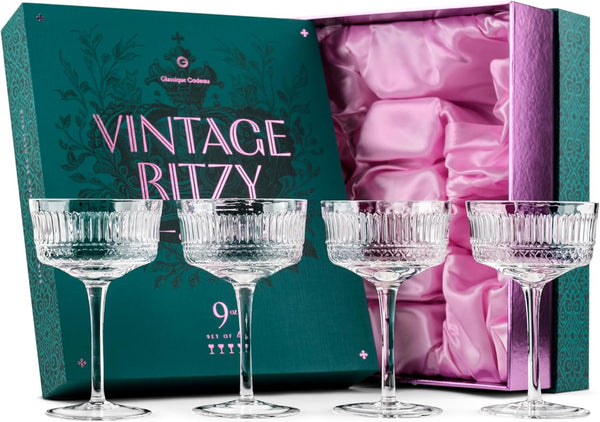
Limited Edition

Our Pick
Bestseller
Sidecar FAQ
What are the ingredients to a Sidecar?
Cognac, Cointreau (or another dry orange liqueur), and fresh lemon juice – classically 2 oz, 1 oz, and 1 oz – shaken with ice and served up in a sugar-rimmed coupe with an orange twist.
What is the best ratio for Sidecar?
2:1:1 – two parts cognac to one part each Cointreau and lemon – is the modern standard. The original 1922 printings used equal parts, which drinks sweeter; dry palates tighten toward 3:2:1. Start at 2:1:1 and adjust once.
How to make a good Sidecar?
Fresh lemon squeezed the same day, a real VS or VSOP cognac, a hard 10-to-15-second shake, and a properly chilled glass. If you sugar the rim, do it on the outside edge only, before chilling.
What glass is a sidecar served in?
A chilled coupe or other stemmed cocktail glass, traditionally with a sugared rim. Stemware matters because the drink is served without ice – the stem keeps your hand's warmth away from the bowl.
Can you make a sidecar with bourbon?
Yes – same 2:1:1 build with bourbon in place of cognac. It's a recognized variation, warmer and more caramel-toned than the French original. Rye works too, for a spicier read.
Does a sidecar need a sugar rim?
No. The rim is traditional theater, not structure – the drink balances without it, and many bartenders skip it to keep the profile dry. If you use one, half the rim is the cleaner play.
Pair with: coupe glasses, brandy & cognac snifters, Art Deco & Gatsby barware, the classics collection, anniversary gifts, cocktail party sets.
A drink the Ritz fights to claim deserves a glass that holds its side of the argument. Every Glassique Cadeau set arrives in our signature satin-lined gift box with a cocktail recipe printed on the lid, and orders over $89 ship free.
- Lead-free, hand-blown crystal
- 30-day satisfaction guarantee
- Arrives gift-ready in a satin-lined box


