
Recipes · 8 min read
How to Make a Sazerac: New Orleans' Official Cocktail
The Sazerac: rye, sugar, Peychaud's bitters, and an absinthe rinse in a chilled lowball with no ice – the 1850s New Orleans ritual, done properly.

 Arthur BulotaCo-founder & CEO, Glassique Cadeau
I wanted to write about a cocktail with a genuine ritual, and the Sazerac's two glasses and absinthe rinse are exactly that. I want you to slow down, do the rinse, and understand why New Orleans never revised it.
Email me if you have any questions: shop@glassiquecadeau.com. I answer every email personally.

Rye, sugar, Peychaud's, and a ghost of absinthe – New Orleans wrote this one down in the 1850s and never revised it.
The Sazerac is the only cocktail with a legislature behind it – Louisiana named it New Orleans' official cocktail in 2008, formalizing what the city had known for 150 years. It looks like an Old Fashioned and drinks like nothing else. Here's how to make a Sazerac properly: two glasses, one rinse, and zero ice in the drink.
TL;DR: Stir 2 oz rye whiskey, 1 sugar cube (or 1/4 oz syrup), and 3 to 4 dashes of Peychaud's bitters with ice for 15 to 20 seconds. Strain into a chilled, absinthe-rinsed lowball – no ice in the glass. Express a lemon peel over the top. Many purists discard the peel; we drop it in.
What's in a Sazerac
Two ounces of rye, one sugar cube, 3–4 dashes Peychaud's, an absinthe rinse, and a lemon peel.
- 2 oz (60 ml) rye whiskey – spicy, dry, and period-correct. More on the bourbon question below.
- 1 sugar cube – or 1/4 oz simple syrup if you'd rather skip the muddling. The cube is tradition; the syrup is consistency.
- 3 to 4 dashes Peychaud's bitters – the non-negotiable ingredient. Not Angostura. Not "whatever's open."
- 1/4 oz (7 ml) absinthe – for rinsing the glass, not for drinking volume. Herbsaint is the New Orleans substitute.
- Lemon peel – expressed over the surface. The oils are the final ingredient, not decoration.
Note what's missing: ice in the serving glass, fruit in the drink, and any forgiveness for substitutions. The Sazerac is a precision instrument from an era that didn't know it was being precise.
The spec, at a glance:
| Component | Spec |
|---|---|
| Rye whiskey | 2 oz (60 ml) |
| Sugar | 1 cube or 1/4 oz simple syrup |
| Peychaud's bitters | 3 to 4 dashes |
| Absinthe | 1/4 oz (7 ml), rinse only |
| Glass | Chilled lowball, no ice |
| Method | Stir with ice 15 to 20 seconds, strain into the rinsed glass |
| Garnish | Lemon peel, expressed |
The Two-Glass Method
Chill one glass, muddle and stir in the other, rinse with absinthe, strain in – no ice served.
The classic ritual uses two lowball glasses working in parallel, and it's worth doing the full ceremony at least once:
- Pack glass one with ice and set it aside to chill. This will be the serving glass.
- In glass two (or a mixing glass), saturate the sugar cube with Peychaud's, add a small splash of water, and muddle to a grainy paste.
- Add the rye, fill with ice, and stir 15 to 20 seconds – this is a stirred drink, never shaken.
- Dump the ice from glass one, pour in the absinthe, and roll the glass until the inside is coated. Tip out the excess.
- Strain the rye mixture into the rinsed, chilled glass. No ice goes in.
- Express a lemon peel over the surface, wipe it around the rim, and drop it in or discard – both have partisans.
The drink arrives cold and gets to breathe as it warms – the absinthe blooms, the Peychaud's opens, and the last third tastes different from the first. That slow reveal is the entire argument against ice. Drink it in fifteen unhurried minutes; after that it's room-temperature whiskey and regret.
The Absinthe Rinse, Properly
Coat the glass and discard – a quarter ounce of absinthe is atmosphere, not an ingredient.
A rinse, not a pour. The absinthe should be atmosphere – the anise reads on the nose before the rye reaches your tongue, and a heavy hand turns the whole drink into licorice. Coat, then discard; a quarter ounce does the job with margin. Some bartenders use an atomizer and simply mist the glass, which is tidy and just as correct.
If you've fallen far enough down this rabbit hole to own proper absinthe glassware – the Belle Époque Pontarlier set ($59.99), with the reservoir shape built for the louche ritual – the leftover rinse bottle will not go to waste. The Sazerac is most people's first absinthe purchase and rarely their last.
Peychaud's Is Non-Negotiable
Peychaud's lighter cherry-anise lean ties rye to absinthe – Angostura instead makes a fine drink that isn't a Sazerac.
Antoine Amédée Peychaud was a Creole apothecary mixing his proprietary bitters in New Orleans in the 1830s, and the Sazerac grew up around his recipe. Peychaud's is lighter, sweeter, and more floral than Angostura, with a cherry-anise lean that ties the rye to the absinthe – swap in Angostura and you get a fine drink that is not a Sazerac. (A dash of Angostura alongside the Peychaud's is a recognized New Orleans flourish. Alongside. Not instead.)
A single bottle of Peychaud's pours hundreds of dashes and keeps for years on the shelf. There is no practical argument for skipping it, only an impatience argument – and the Sazerac was never a drink for the impatient. Track down the bottle first; the recipe will still be here.
Rye, Not Bourbon – and the Cognac Footnote
Rye is the spec since the 1870s phylloxera blight – bourbon softens the dry spine the absinthe needs.
The original Sazerac was built on cognac – the drink takes its name from Sazerac-de-Forge et Fils, the brandy house whose bottles stocked the Sazerac Coffee House. Then the phylloxera blight gutted French vineyards in the 1870s, cognac became scarce, and New Orleans did what port cities do: adapted. American rye stepped in and never left.
Bourbon is the common modern shortcut, and it makes a softer, sweeter drink that loses the dry spine the absinthe needs to push against. Use rye. If you want the history lesson in a glass, split the base – 1 oz rye, 1 oz cognac – which several serious New Orleans bars pour as the house standard. (If the cognac bottle is open anyway, the sidecar is the obvious second act.)
New Orleans, 1850s: The Coffee House Story
The drink took its name from the Sazerac Coffee House on Exchange Alley in the 1850s.
The Sazerac Coffee House opened on Exchange Alley in the 1850s – "coffee house" being the era's polite term for a bar – and the house drink of cognac, sugar, and Peychaud's bitters took the establishment's name. The absinthe rinse entered the spec in the same era, the rye swap followed in the 1870s, and when the United States banned absinthe in 1912, New Orleans eventually answered with Herbsaint, the local anise liqueur that still rinses half the Sazeracs in the French Quarter. The drink's history is a municipal biography – every disruption answered with a workaround, every workaround now canon.
Worth saying: the "first cocktail ever invented" claim you'll hear on Bourbon Street tours is myth – the word cocktail predates the drink by decades. The Sazerac doesn't need the embellishment.
The Glass: A Chilled Lowball, No Ice
A chilled 9 oz lowball with no ice – oversized glasses make a correct 3 oz pour look lost.
A Sazerac needs a short, heavy glass with a cold interior and no company. Our pick is the Speakeasy Lowball set of 4 ($42.99, 9 oz) – hand-blown, lead-free crystal with the kind of Deco weight that suits a drink born in a coffee house with a password. The compact bowl matters: with no ice displacing volume, an oversized glass makes a correct 3 oz pour look lost.
And because a Sazerac will make you take rye seriously: the Whiskey Tasting set of 4 ($46.99, 4 oz) is the tool for auditioning bottles neat before they earn a place in the build. Our whiskey neat collection and the full lowball range cover both halves of that habit.
Shop this guide
All 54 pieces
Limited Edition

Bestseller

Perfect for Him
Sazerac FAQ
What ingredients are in a Sazerac?
Rye whiskey (2 oz), a sugar cube or 1/4 oz simple syrup, 3 to 4 dashes of Peychaud's bitters, an absinthe rinse, and a lemon peel. Served in a chilled rocks glass with no ice.
How is a Sazerac traditionally served?
Straight up in a chilled Old Fashioned glass that has been rinsed with absinthe – stirred with ice, then strained, so the drink is cold but carries no ice. The lemon peel is expressed over the top.
What's the difference between Sazerac and Old Fashioned?
Three things: rye instead of bourbon (usually), Peychaud's instead of Angostura, and an absinthe rinse instead of ice. The Old Fashioned sits on a big cube; the Sazerac arrives naked in a chilled glass.
What alcohol is best for Sazerac?
A solid rye whiskey at 90 to 100 proof – its dry spice balances the sugar and anise. The pre-1870s original used cognac, and a split base of rye and cognac is a respected compromise.
What can I use instead of absinthe in a Sazerac?
Herbsaint – the New Orleans anise liqueur created as an absinthe stand-in – or Pernod. Both rinse the glass with the same anise perfume at a friendlier price.
How do you pronounce Sazerac?
SAZ-uh-rak – three syllables, stress on the first. Order it confidently; it's the city's official cocktail and the bartender has heard every mangling imaginable.
Pair with: lowball & rocks glasses, whiskey neat glasses, Old Fashioned & Negroni glasses, speakeasy-era barware, the classics collection, his birthday gifts.
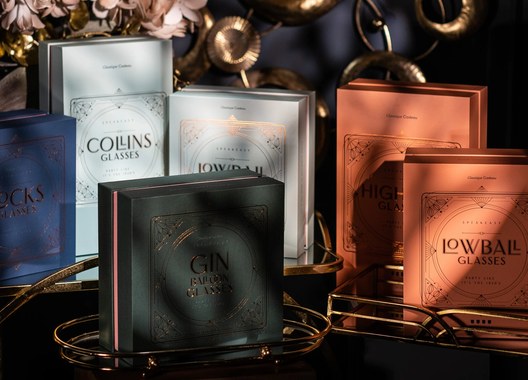
A drink with its own act of legislation deserves glassware that takes the assignment seriously. Every Glassique Cadeau set arrives in our signature satin-lined gift box with a cocktail recipe printed on the lid, and orders over $89 ship free.
- Lead-free, hand-blown crystal
- 30-day satisfaction guarantee
- Arrives gift-ready in a satin-lined box


